

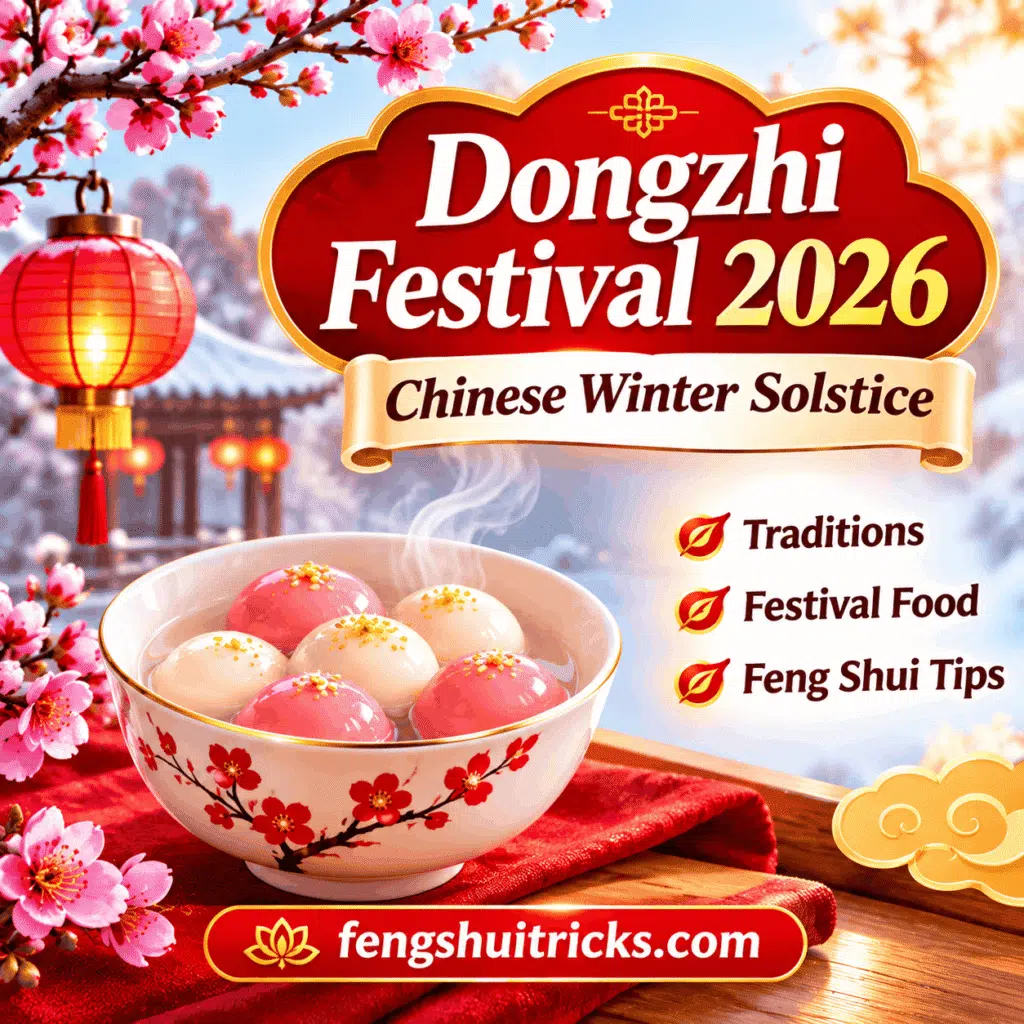
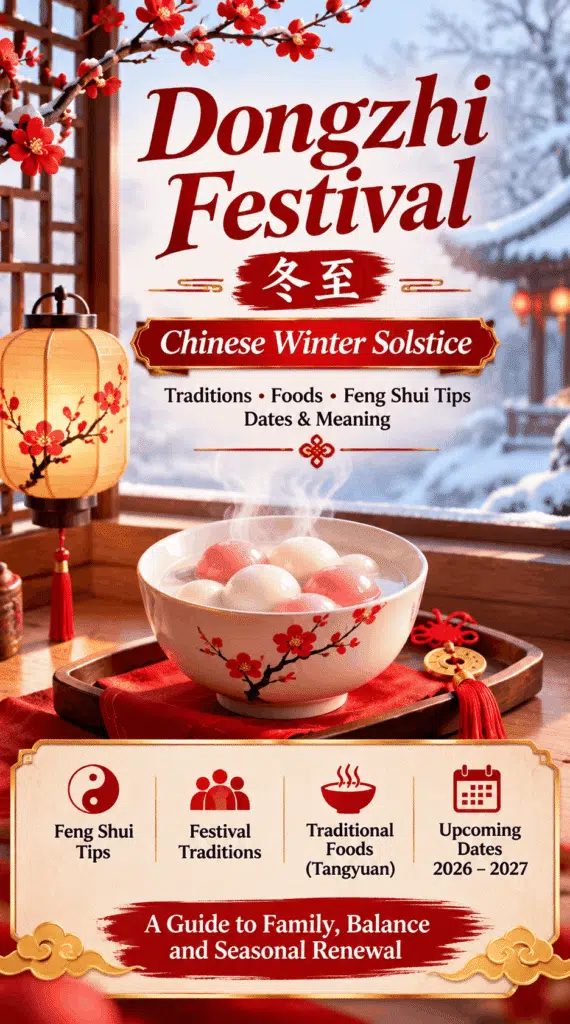
Dongzhi Festival 2026: Chinese Winter Solstice Traditions, Food & Feng Shui Tips.
Also called the Dong Zhi Festival, this traditional Chinese winter festival celebrates the winter solstice in China through family gatherings, seasonal foods, and customs passed down through generations.
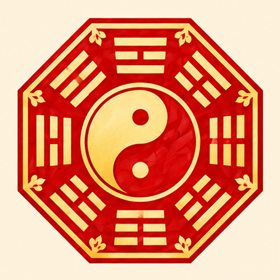
It marks the shortest day and longest night of the year in the Northern Hemisphere, symbolizing the return of longer days, fresh beginnings, and the balance of yin and yang.
In 2026, Dongzhi falls on December 22 in China. Families celebrate by preparing traditional foods such as tangyuan and dumplings, gathering with loved ones, and honoring their ancestors.
The festival is also connected with traditional Chinese beliefs about harmony, renewal, and the changing seasons.
In Feng Shui, Dongzhi is a meaningful time to refresh your home, welcome positive energy, and create a peaceful environment.
If you’re preparing your home for the festive season, explore our guides to Chinese New Year flowers and fruits, Feng Shui Christmas tree placement, and yin and yang balance.
Let’s explore the Dongzhi Festival 2026 date, Chinese winter solstice traditions, traditional foods, spiritual meaning, and simple Feng Shui tips for celebrating this special occasion.


Quick Answer: What Is the Dongzhi Festival?
Dongzhi is the traditional Chinese winter solstice festival, celebrated around December 21 or 22 each year. The word Dongzhi means “winter’s arrival” or “winter’s extreme.”
It marks the time when daylight begins to increase again after the shortest day of the year.
| Dongzhi Festival Facts | Details |
|---|---|
| Chinese name | 冬至 (Dōngzhì) |
| English name | Chinese Winter Solstice Festival |
| Dongzhi Festival 2026 | December 22 in China |
| Dongzhi Festival 2027 | December 22 in China |
| Main meaning | Return of light and seasonal renewal |
| Traditional foods | Tangyuan, dumplings, soups, rice dishes |
| Popular traditions | Family meals, ancestor remembrance, seasonal customs |
| Feng Shui meaning | Yin-yang balance and harmony |
Unlike Chinese New Year, Dongzhi follows the solar calendar and occurs around the same time every December.
When Is Dongzhi Festival in 2026 and 2027?
The Chinese winter solstice festival usually falls between December 21 and 23.
In 2026, Dongzhi is on Tuesday, December 22, according to the traditional Chinese solar calendar.
The winter solstice happens at one exact moment worldwide, so the local date can sometimes differ by one day.
Upcoming Dongzhi Festival Dates
| Year | Dongzhi Date in China | Day |
|---|---|---|
| 2025 | December 21 | Sunday |
| 2026 | December 22 | Tuesday |
| 2027 | December 22 | Wednesday |
| 2028 | December 21 | Thursday |
| 2029 | December 21 | Friday |
| 2030 | December 22 | Sunday |
The dates above follow China Standard Time.
The winter solstice is the shortest daylight period of the year in the Northern Hemisphere. After this date, daylight gradually increases.
For more background, read this guide to the Chinese Winter Solstice Festival.
Why Is Dongzhi Important in Chinese Culture?
The Dongzhi Festival has been celebrated for centuries and has deep roots in Chinese history.
In ancient times, people observed the changing seasons to understand farming cycles, weather patterns, and the movement of the Sun.
Dongzhi became an important time for family gatherings, seasonal meals, and honoring ancestors.
The festival is also one of the 24 solar terms in the traditional Chinese calendar.
These solar terms divide the year into seasonal periods and have been used for generations.
You can learn more about the traditional Chinese calendar.
UNESCO also recognizes China’s 24 Solar Terms as an important cultural tradition.

Is Dongzhi Also Called the Dong Zhi Festival?
Yes. Dongzhi Festival is sometimes written as Dong Zhi Festival. Both names refer to the same traditional Chinese winter solstice celebration.
This important Chinese winter festival celebrates the changing seasons, family unity, and the gradual return of longer days.
The winter solstice in China has been observed for centuries through traditional foods, family gatherings, and seasonal customs.
The Spiritual Meaning of Dongzhi
Dongzhi represents the natural balance between darkness and light.
In traditional Chinese philosophy:
- Yin represents darkness, rest, coolness, and quiet energy.
- Yang represents light, warmth, activity, and growth.
During the winter solstice, yin is traditionally considered to be at its strongest.
After Dongzhi, yang gradually begins to increase as daylight returns.
This is why Dongzhi is often associated with hope, renewal, and fresh beginnings.
Feng Shui insight: Yin and yang are not good and bad energies. Both are important. A balanced home should include quiet spaces for rest and comfortable areas for family activities.
How Is the Dongzhi Festival Celebrated?
The Chinese winter solstice celebration includes several beautiful traditions.
Although customs vary between families and regions, food, family, and seasonal renewal are central themes.
1. Family Reunions
Dongzhi is a special occasion for spending time with loved ones.
Families often gather for a warm meal, share stories, and enjoy traditional dishes.
The celebration highlights the importance of family unity and togetherness.
2. Honoring Ancestors
Some families remember their ancestors through traditional ceremonies, offerings, or visits to ancestral graves.
These customs are ways of showing respect and gratitude to previous generations.
3. Eating Traditional Dongzhi Foods
Food is one of the most important parts of the celebration.
Tangyuan, dumplings, wontons, and warming soups are popular choices.
Each dish may have its own meaning depending on the region.
4. Welcoming the Return of Light
Dongzhi marks the turning point when daylight gradually begins to increase.
Traditionally, this change represents hope and the beginning of a new seasonal cycle.
5. Counting the Nine Periods of Winter
An interesting Chinese winter tradition is called Shujiu, or counting the nine periods of winter.
The tradition divides the period after Dongzhi into nine groups of nine days, making a total of 81 days.
It reflects the gradual change from winter toward spring.
Dongzhi Festival Food: What Do Chinese Families Eat?
Dongzhi festival food is an important part of the Chinese winter solstice celebration.
Traditional dishes symbolize warmth, family unity, and happiness.
Tangyuan: Sweet Glutinous Rice Balls
Tangyuan are round rice balls made from glutinous rice flour.
They may contain sweet fillings such as black sesame, peanuts, or red bean paste.
Tangyuan are often served in a warm sweet soup.
Their round shape represents family reunion, completeness, and harmony.
Eating tangyuan is especially popular in southern Chinese communities.
Dumplings: A Traditional Winter Solstice Food
Dumplings are commonly eaten during Dongzhi in northern China.
A traditional story connects this custom with the ancient physician Zhang Zhongjing, who is remembered for helping people suffering from winter cold.
Today, dumplings are enjoyed as comforting seasonal food.
Vegetarian dumplings filled with cabbage, mushrooms, tofu, or chives are also delicious choices.
Wontons and Warming Soups
Some families prepare wontons, noodle soups, or other warm dishes.
These foods are associated with comfort and togetherness during the colder season.
Glutinous Rice and Regional Dishes
Different Chinese communities prepare sticky rice dishes, red bean porridge, rice cakes, and other local specialties.
The exact foods vary by family and region.
Traditional Dongzhi Food Comparison
| Food | Traditional Meaning |
|---|---|
| Tangyuan | Family unity and completeness |
| Dumplings | Winter comfort and warmth |
| Wontons | Comfort and family meals |
| Glutinous rice | Togetherness and celebration |
| Warming soups | Seasonal comfort |
Expert tip: A meaningful Dongzhi celebration does not require an expensive meal. Preparing simple traditional food and enjoying time together reflects the spirit of the festival.

7 Feng Shui Tips for Dongzhi Festival 2026
The Chinese winter solstice is a wonderful opportunity to refresh your home and create a peaceful atmosphere.
Although these Feng Shui practices are not required Dongzhi traditions, they can be used as simple seasonal rituals.
1. Embrace Yin and Yang Balance
During Dongzhi, yin energy is traditionally considered strongest, while yang begins to increase.
What to do:
- Use warm, soft lighting.
- Open curtains during the day.
- Create comfortable seating areas.
- Keep bedrooms calm and relaxing.
Feng Shui tip: Avoid making your home too dark or overly bright. A comfortable balance of light helps create a welcoming atmosphere.
2. Clean and Declutter Your Home
Dongzhi represents seasonal renewal, making it a good time to organize your surroundings.
In Feng Shui, clutter is traditionally believed to interrupt the smooth flow of Chi energy.
What to do:
- Clean your front entrance.
- Remove unnecessary objects.
- Organize shoes and bags.
- Repair broken lights or door handles.
- Keep pathways clear.
For more ideas, explore how to harness fresh Chi energy in your home.
3. Bring Nature Indoors
Plants are often associated with growth and renewal in Feng Shui.
During Dongzhi, consider adding healthy indoor plants, bamboo, or evergreen decorations.
Choose plants that suit your home’s light and temperature.
Expert tip: A healthy plant is a better choice than an unhealthy plant selected only for its symbolic meaning.
Family meals are central to Dongzhi celebrations.
In Feng Shui, a welcoming dining area can represent harmony and connection.
What to do:
- Keep your dining table clean.
- Arrange comfortable seating.
- Use soft lighting.
- Avoid unnecessary clutter.
- Encourage relaxed family conversations.
Round dining tables symbolize unity in some Feng Shui traditions, but any comfortable dining arrangement can work.
5. Add Warm Seasonal Colors
Colors can influence the mood and appearance of a room.
During Dongzhi, warm colors can help create a comfortable atmosphere.
| Color | Feng Shui Symbolism | Decorating Idea |
|---|---|---|
| Red | Joy and vitality | Cushions |
| Orange | Warmth and activity | Throws |
| Yellow | Stability | Table decorations |
| Gold | Abundance | Small ornaments |
| Beige | Comfort | Rugs and blankets |
You don’t need to repaint your home. Small decorative changes can make a noticeable difference.
6. Refresh Your Feng Shui Wealth Area
In traditional Feng Shui, the Southeast is associated with wealth in the classical Bagua system.
During Dongzhi, you can clean and organize this area.
Consider adding a healthy plant or a meaningful decorative object.
For more guidance on Bagua areas, explore our article about the Feng Shui Southwest corner, which focuses on another important part of the home.
Remember: Feng Shui is a traditional symbolic practice and cannot guarantee wealth or financial success.
7. Prepare Your Home for the New Year
Dongzhi arrives shortly before the Western New Year and several weeks before Chinese New Year.
Use this time to refresh your surroundings.
Simple ideas:
- Organize your living room.
- Clean your entrance.
- Repair broken household items.
- Refresh family photographs.
- Create a peaceful reading corner.
- Set positive goals for the coming year.
These small changes can help your home feel more comfortable and welcoming.
Dongzhi Festival Dos and Don’ts
Here are some simple ways to enjoy a peaceful and meaningful winter solstice celebration.
| Do | Don’t |
|---|---|
| Use warm, soft lighting | Overuse harsh lighting |
| Enjoy traditional foods | Treat traditional food beliefs as medical rules |
| Spend time with family | Feel pressured to host an expensive celebration |
| Clean and declutter | Leave walkways blocked |
| Add natural decorations | Overcrowd rooms |
| Create a restful bedroom | Use excessive stimulating decorations |
Additional Feng Shui Considerations
Bedroom mirrors: Some Feng Shui traditions discourage mirrors directly reflecting the bed because they are believed to disturb restful energy. This is not a universal Dongzhi rule.
Cold foods: Traditional seasonal practices often favor warm meals during winter. However, cold foods are not inherently harmful.
Christmas decorations: Keep bedrooms peaceful and avoid excessive decorations if they interfere with sleep. Our Feng Shui Christmas tree placement guide offers more ideas.
Dongzhi Festival vs Chinese New Year vs Christmas
These celebrations occur around the festive season but have different meanings.
| Festival | Typical Date | Main Meaning |
|---|---|---|
| Dongzhi Festival | December 21–22 | Winter solstice and family unity |
| Christmas | December 25 | Christian celebration of Jesus’ birth, alongside secular traditions |
| Chinese New Year | January or February | Beginning of the traditional Chinese calendar year |
| Western New Year | January 1 | Beginning of the Gregorian calendar year |
Dongzhi is not another name for Chinese New Year. It is a separate traditional festival connected with the winter solstice.
How to Celebrate Dongzhi Festival at Home
You can enjoy a meaningful Dongzhi celebration with a few simple activities.
Easy Dongzhi Celebration Checklist
- Clean your front entrance.
- Prepare tangyuan or dumplings.
- Enjoy a meal with loved ones.
- Decorate with warm lighting.
- Learn about yin and yang.
- Share a favorite family memory.
- Reflect on something you’re grateful for.
- Set one positive goal for the coming season.
For children, making tangyuan or drawing a winter solstice sun can be a fun way to learn about Chinese culture.
Interesting Facts About the Chinese Winter Solstice Festival
1. Dongzhi Is One of the 24 Solar Terms
The traditional Chinese calendar divides the year into 24 seasonal periods.
Dongzhi is one of these important markers.
2. The Festival Has a Long History
Dongzhi customs developed over many centuries and became an important seasonal celebration during imperial China.
3. Tangyuan Symbolize Family Reunion
The round shape of tangyuan represents unity, completeness, and togetherness.
4. Daylight Gradually Increases After Dongzhi
In the Northern Hemisphere, days begin growing longer after the winter solstice, even though cold weather may continue.
5. Dongzhi Is Celebrated by Chinese Communities Worldwide
Families may celebrate through traditional meals, cultural gatherings, and seasonal customs.
6. Dongzhi Represents Yin and Yang Balance
The festival symbolizes the seasonal shift from maximum yin toward increasing yang.
7. Dongzhi Is Not Usually a Nationwide Public Holiday
Although culturally important, Dongzhi is not generally a nationwide statutory public holiday in mainland China.
Recommended Feng Shui & Chinese New Year Guides
As Dongzhi marks the return of longer days, it’s also a wonderful time to start preparing for the New Year. Explore these helpful guides for festive traditions, lucky decorations, and simple ways to refresh your home.
Chinese New Year Traditions & Celebrations
- 15 New Year Feng Shui Rituals for 2027 – Discover simple rituals, cleaning traditions, and meaningful ways to welcome the New Year.
- Chinese New Year Flowers and Fruits – Learn which traditional flowers and fruits symbolize happiness, prosperity, and fresh beginnings.
Lucky Colors & Home Feng Shui
- Lucky Colors for 2027 – Explore the colors associated with the Fire Goat year and how to use them in your home.
- 2027 Lucky Colors for Every Chinese Zodiac Sign – Find traditional lucky and unlucky colors for your Chinese zodiac animal.
- Feng Shui Christmas Tree Placement – Discover simple decorating ideas for a peaceful and welcoming festive home.
Positive Energy & Fresh Beginnings
- How to Harness Chi Energy at Home – Learn practical ways to create a fresh, comfortable, and balanced living space.
- Moving Into a New House: Feng Shui Rituals and Lucky Dates – Explore traditional housewarming customs and ways to prepare for a fresh start.
Frequently Asked Questions About Dongzhi Festival
What is the Dongzhi Festival?
Dongzhi is the traditional Chinese winter solstice festival, celebrating the shortest day of the year in the Northern Hemisphere and the gradual return of longer daylight hours.
When is Dongzhi Festival 2026?
Dongzhi falls on December 22, 2026, in China. The local date of the astronomical winter solstice can differ depending on the time zone.
What is the difference between Dongzhi and the winter solstice?
The winter solstice is an astronomical event. Dongzhi is the Chinese name for the solar term and the traditional celebration connected with it
When is Dongzhi Festival 2027?
Dongzhi falls on December 22, 2027, in China.
What is the Chinese winter solstice called?
The Chinese winter solstice is called Dongzhi (冬至), meaning winter’s arrival or winter’s extreme.
What foods are eaten during Dongzhi?
Popular Dongzhi foods include tangyuan, dumplings, wontons, glutinous rice, and warming soups.
Why do Chinese people eat tangyuan during Dongzhi?
Tangyuan symbolize family reunion and completeness because of their round shape.
What are the main Dongzhi festival traditions?
Common traditions include family meals, preparing seasonal foods, honoring ancestors, and celebrating the return of longer days.
Is Dongzhi the same as Chinese New Year?
No. Dongzhi celebrates the winter solstice, while Chinese New Year marks the beginning of a new year in the traditional Chinese calendar.
Is Dongzhi a religious festival?
Dongzhi has connections with traditional Chinese philosophy and ancestral customs, but it is also widely celebrated as a cultural and family occasion.
What is the spiritual meaning of Dongzhi?
Dongzhi symbolizes balance, renewal, and the gradual return of light after the darkest part of the year.
How does Feng Shui relate to Dongzhi?
Both Feng Shui and Dongzhi symbolism involve yin and yang. The festival can be an opportunity to create a comfortable and harmonious home.
What are the best Feng Shui colors for Dongzhi?
Warm colors such as red, orange, yellow, gold, and earthy beige can create a welcoming seasonal atmosphere.
What should you avoid during Dongzhi?
There are no universal rules about what everyone must avoid. Some families follow traditional customs, while others simply enjoy a meal together.
Conclusion: Celebrate Dongzhi With Harmony and Renewal
The Dongzhi Festival 2026 is more than a celebration of the shortest day of the year. It represents family connection, gratitude, seasonal change, and the symbolic return of light.
From enjoying tangyuan and dumplings to understanding yin and yang, Dongzhi offers meaningful ways to appreciate Chinese traditions.
You can also use this special occasion to refresh your home with simple Feng Shui practices, warm lighting, natural decorations, and comfortable gathering spaces.
As the days begin growing longer, Dongzhi reminds us that every season brings an opportunity for renewal.

Bhawana Rathore is the founder of Feng Shui Tricks and a Feng Shui writer and educator. Feng Shui helped her through a hard time, and since 2020 she has been turning it into clear, practical steps, with more than 400 guides and a set of free calculators for arranging your home, understanding lucky symbols and following the Chinese zodiac. She completed the Professional Diploma Course in Feng Shui (CTAA-accredited course) in 2026 and teaches the same ideas on the Feng Shui Tricks YouTube channel. More about Bhawana. If the guides help you, you can buy her a coffee here.