

The Feng Shui elements are wood, fire, earth, metal and water. They aren’t objects so much as five kinds of energy, and each one feeds one element and tames another.
In practice you bring them into a room through colors, shapes and materials, often guided by the bagua map, and you aim for balance rather than more of any one.
This guide gives you one chart with everything in it, then each element in turn, the cycles in plain English, a room-by-room table, and the places where Feng Shui schools disagree.

The five elements at a glance
Keep this chart handy. Most questions about the elements are answered by one row of it.
| Element | Colors | Shapes | Materials and objects | Season | Direction | Too much feels | Too little feels |
|---|---|---|---|---|---|---|---|
| Wood | Green, teal, blue-green | Tall, columnar, vertical stripes | Live plants, wood furniture, cotton, linen | Spring | East, southeast | Restless, overcommitted | Stuck, no new ideas |
| Fire | Red, orange, bright pink, purple | Triangles, points, flames | Candles, lamps, sunlight, animal prints | Summer | South | Agitated, hard to rest | Flat, unseen, low drive |
| Earth | Yellow, beige, terracotta, sand | Square, flat, low and wide | Ceramics, clay, stone, brick | Late summer and the turn of each season | Center, northeast, southwest | Heavy, sluggish | Unsettled, scattered |
| Metal | White, gray, silver, gold, brass | Round, oval, arches | Metal decor, coins, bells, white stone | Autumn | West, northwest | Cold, rigid, critical | Unfocused, disorganized |
| Water | Black, navy, deep blue | Wavy, flowing, irregular | Fountains, aquariums, glass, mirrors (in most Western schools) | Winter | North | Drifting, low energy | Rushed, no time to reflect |
Where the five elements come from
The Chinese name is wuxing (五行), usually translated today as “five phases”. The word xing suggests movement and change, which is why many scholars prefer “phases” to “elements”.
Britannica describes wuxing as the five basic phases that explain change in the cosmos. In the 3rd century BCE, the thinker Zou Yan turned it into a full cosmology that shaped Han dynasty thought.
The Internet Encyclopedia of Philosophy makes a useful contrast. The Greek elements were fixed building blocks of matter, while the Chinese phases were seen as forces that keep moving and turning into one another.
That’s the key to using them at home. You aren’t collecting five objects. You’re reading which kind of energy a room has too much or too little of, and nudging it back.
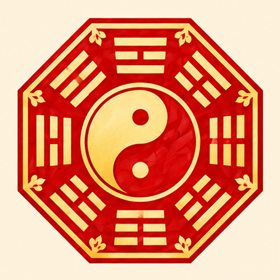
The same five phases also run through Chinese medicine, astrology and the calendar, alongside the idea of yin and yang.
Wood: growth and new starts
Wood is the energy of spring: upward, expanding, always reaching. In a home it stands for growth, health, family and fresh ideas.
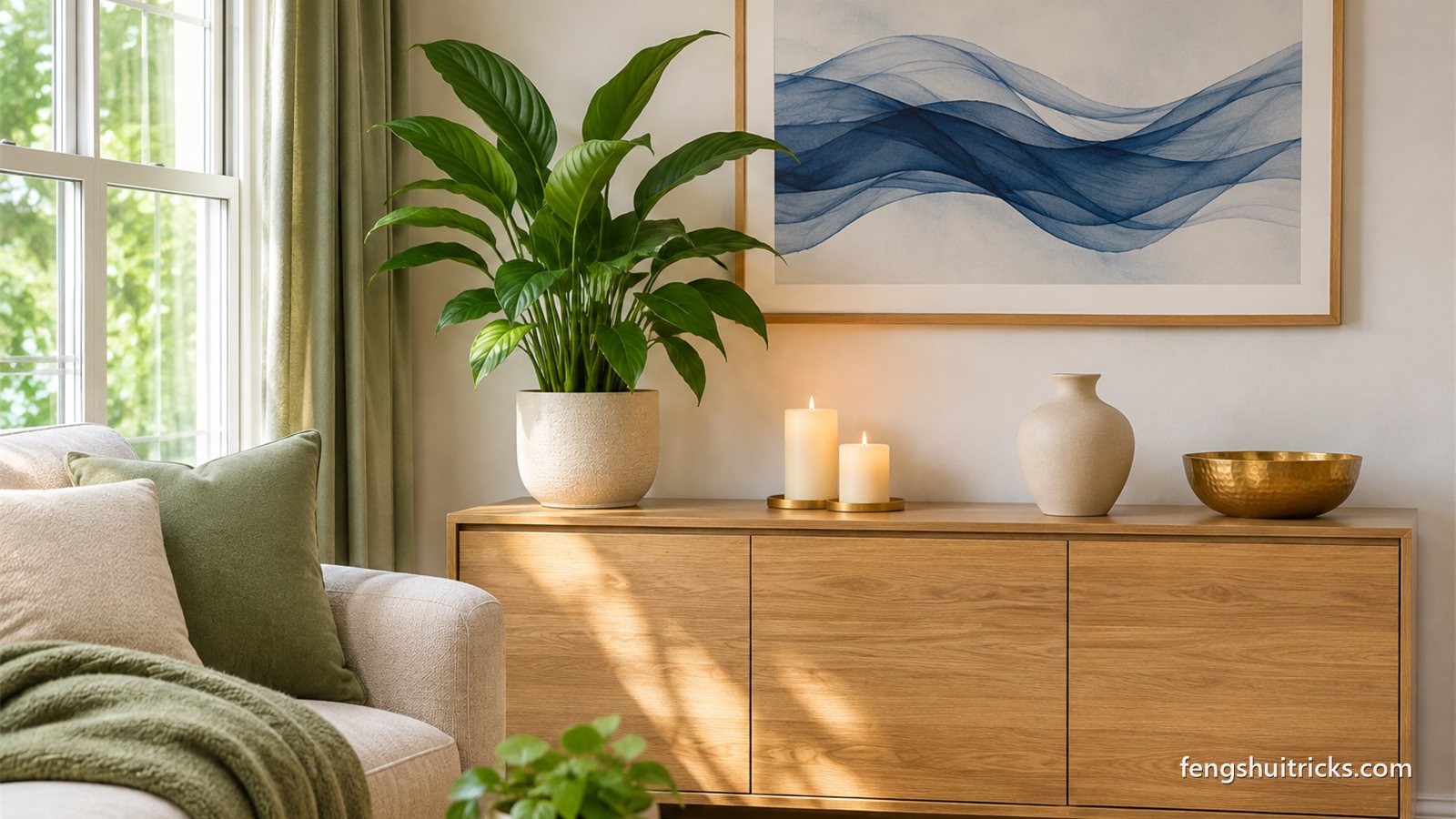
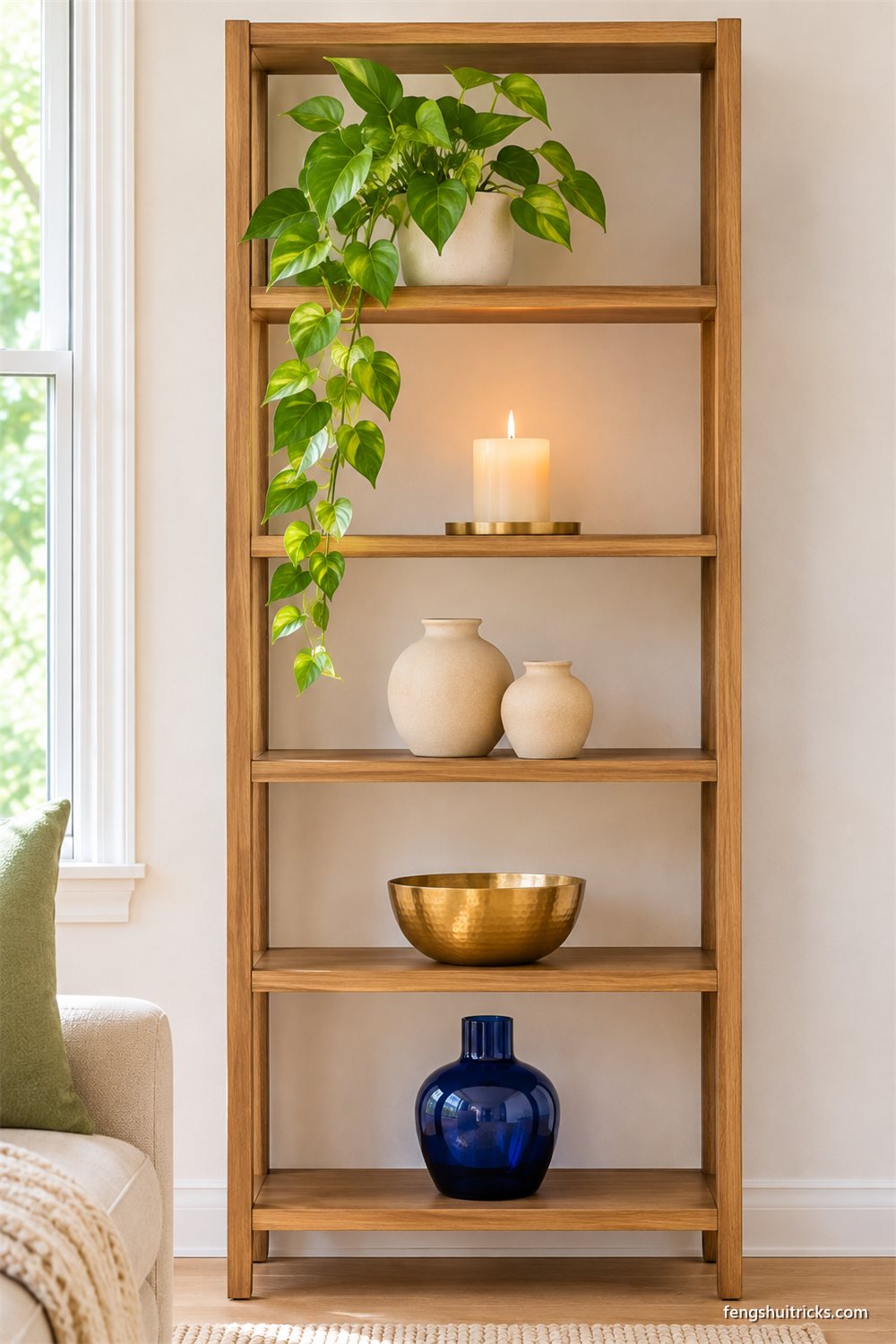
How to add it: healthy live plants, wooden furniture, cotton and linen, tall bookcases, botanical prints, and greens from sage to forest.
Too much looks like a room crammed with plants and tall furniture, and it can feel restless. Calm it with a little metal, such as a round brass tray or white ceramics with a metallic rim.
Too little shows up in bare, hard rooms full of glass and steel. One large plant is often enough to change the feel. Our wood element guide goes further.
Fire: warmth, passion and visibility
Fire is summer energy at its peak. Feng Shui links it with recognition, enthusiasm and warmth between people, and with the fame area of the bagua.
How to add it: lighting of every kind, candles, sunlight, a red or orange accent, triangular shapes, and leather or animal-print textiles.
Screens and electronics also count as fire in most modern practice, which is one reason bedrooms full of devices can feel hard to rest in.
Too much means red walls, bright overhead lights and lots of screens. Soften it with earth tones, which drain fire gently. Too little feels dim and flat; add a warm lamp first. See our fire element guide.
Earth: stability and nourishment
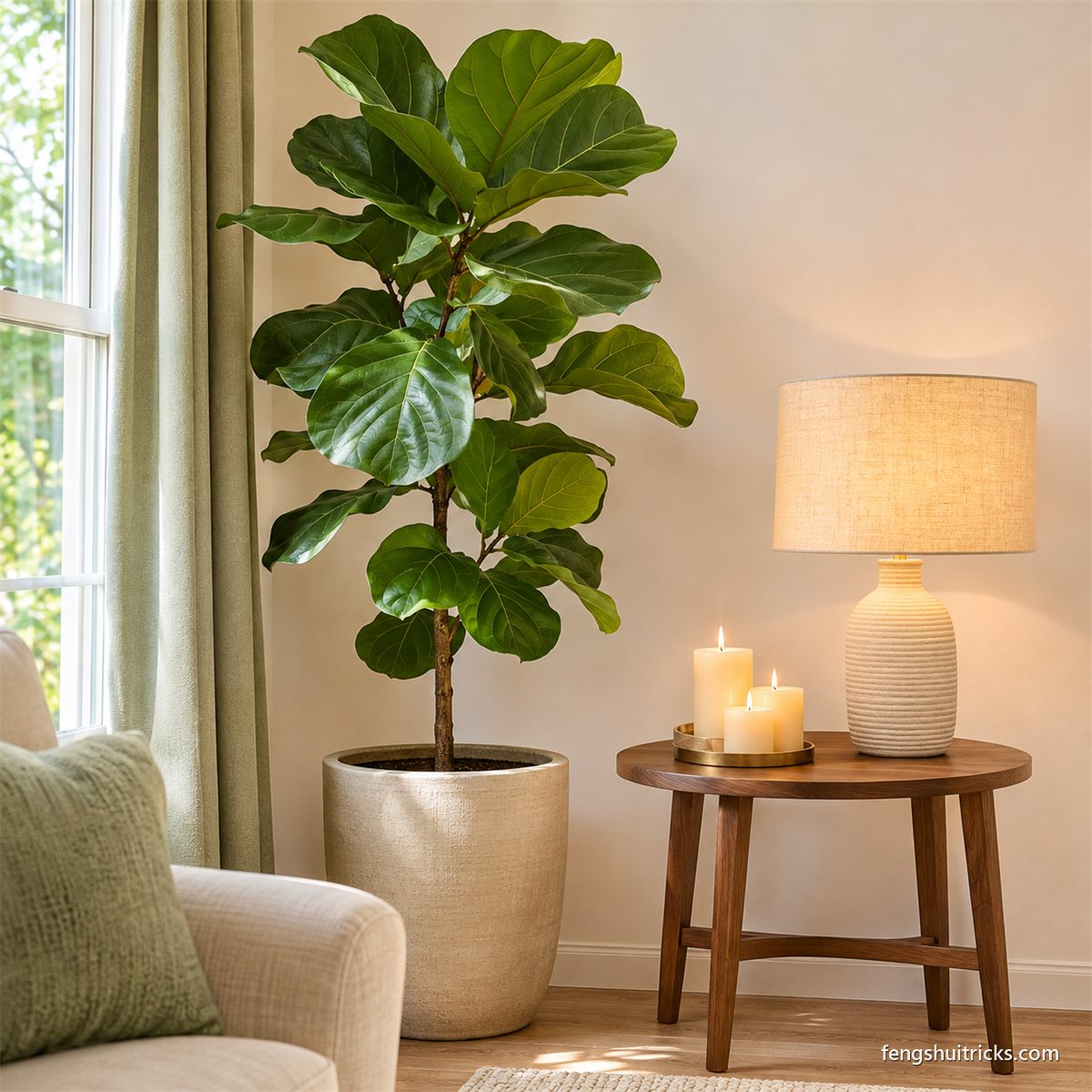
Earth is the steady center. It sits between the seasons and in the middle of the bagua, and it stands for grounding, self-care and dependable relationships.
How to add it: ceramics and pottery, stone, brick, low square furniture, and sandy, terracotta or soft yellow colors. Crystals are often grouped with earth too.
Too much earth feels heavy: dark brown walls, bulky furniture, piles that never move. Lighten it with metal or a plant. Too little feels unsettled, and a few clay pots or a stone bowl will help.
More ideas are in our earth element guide.
Metal: clarity and focus
Metal is autumn energy, drawing inward. Feng Shui ties it to precision, clear thinking, creativity and children, and to helpful people and travel.
How to add it: brass, silver, steel and copper; round and oval shapes; white, gray and metallic colors; a metal wind chime near a door.
Too much metal reads as cold and sterile, like an all-white kitchen with steel everywhere. Warm it with fire (a lamp, a rug with some red) or wood. Too little can show as clutter and trouble focusing.
Our metal element guide has more ideas for each room.
Water: flow, calm and wisdom
Water is winter energy: still, deep and flowing downward. It’s linked with career, wisdom and the ease with which things move in your life.
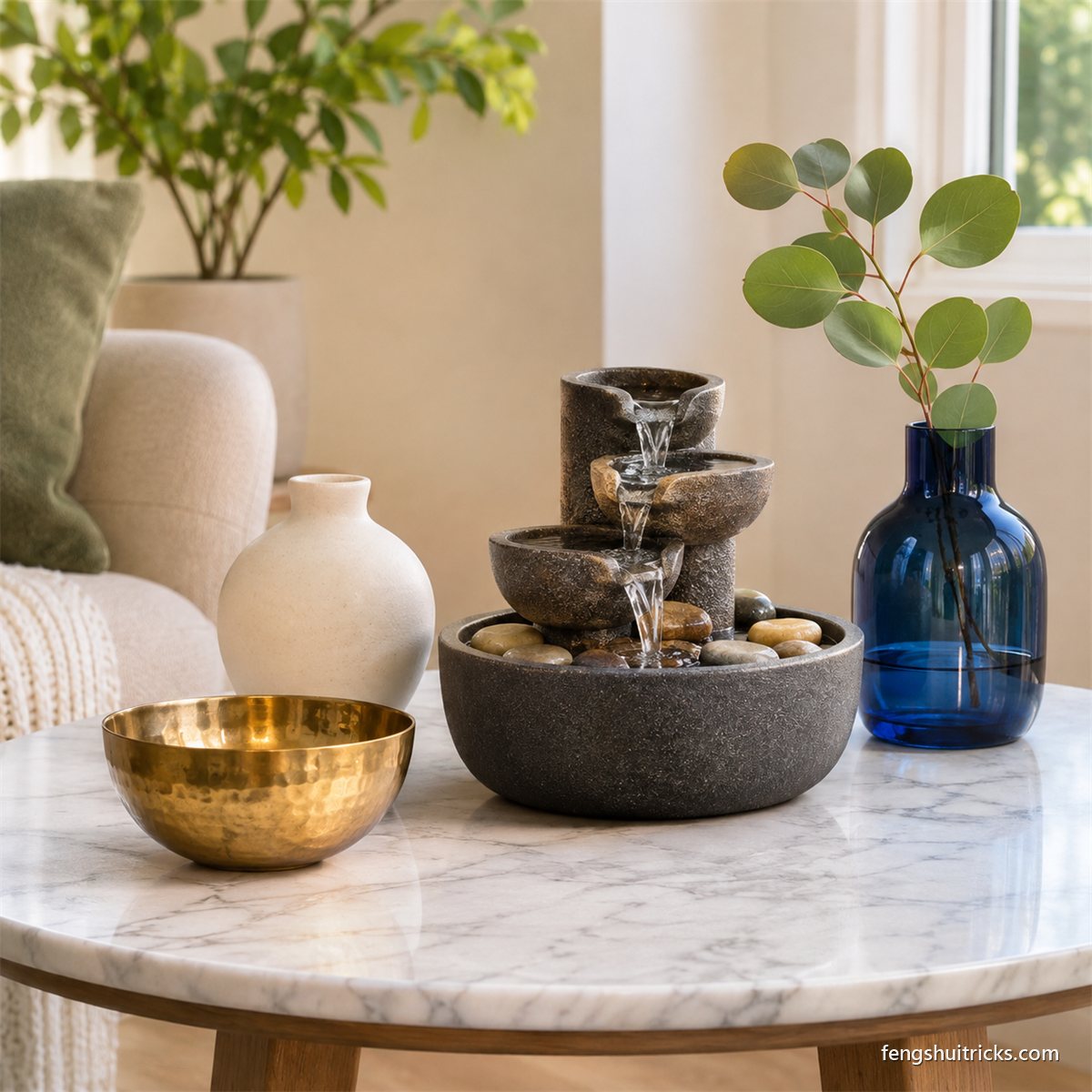
How to add it: a small fountain or aquarium, glass, wavy shapes, art showing water, and black or navy accents. Many Western practitioners count mirrors as water.
Too much water feels gloomy or adrift, so add earth colors and some light. Too little feels rushed and dry. Keep any fountain clean and moving; still, murky water is the opposite of the point.
For placement ideas, read our water element guide.
How the Feng Shui elements interact: the three cycles
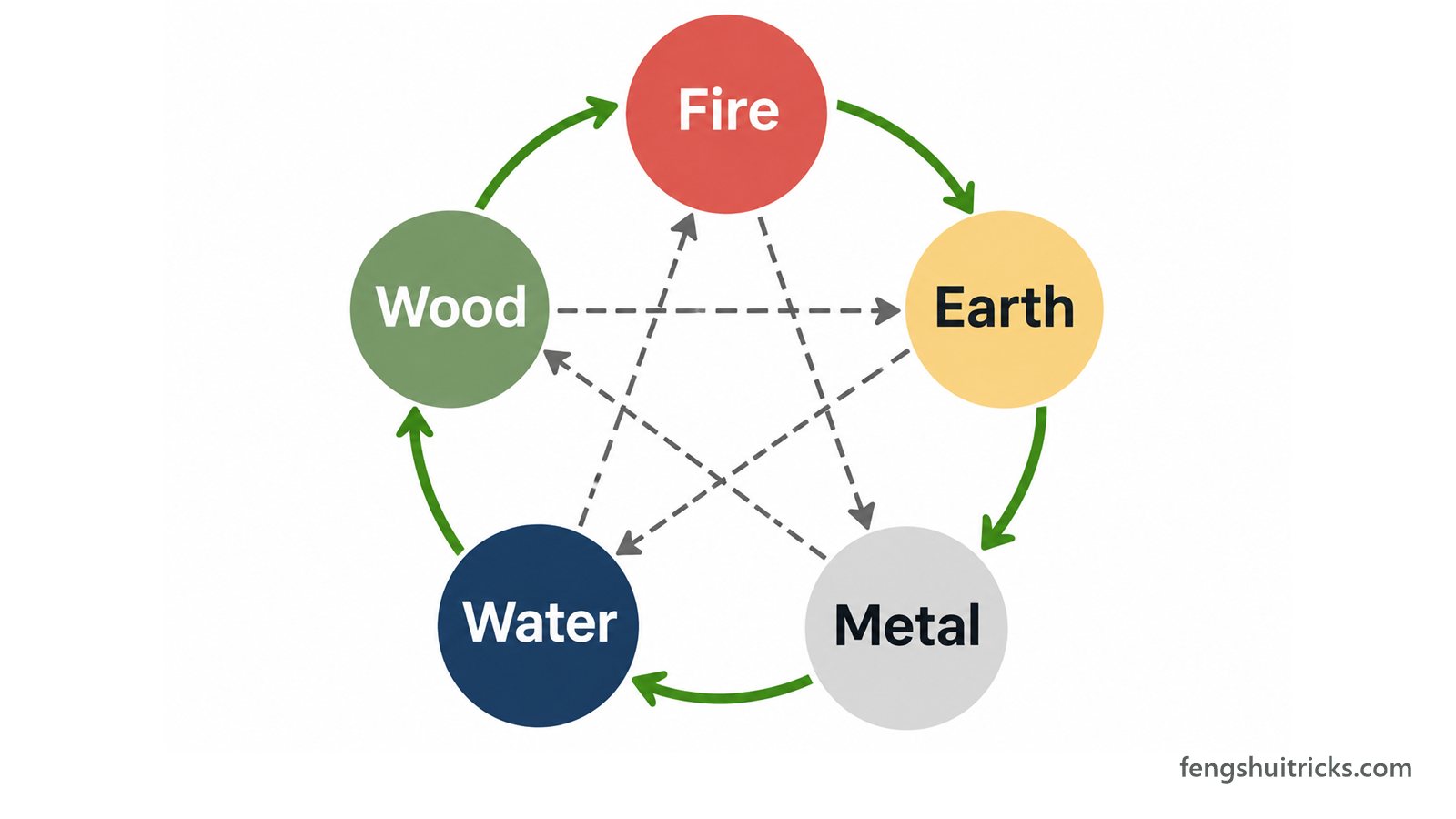
The elements matter less on their own than in how they affect each other. Feng Shui uses three cycles, and once you know them, every “fix” in this guide makes sense.
The productive (nourishing) cycle
Wood feeds fire, fire makes earth (ash), earth holds metal, metal collects water, and water feeds wood. Use it to strengthen a weak element by adding the one that comes before it.
The controlling cycle
Wood breaks up earth, earth dams water, water puts out fire, fire melts metal, and metal cuts wood. Use it when an element is clearly overpowering a room and needs firm handling.
The weakening (draining) cycle
This is the productive cycle run backward: each element tires out the one that feeds it. Fire drains wood, earth drains fire, metal drains earth, water drains metal, and wood drains water.
Many practitioners prefer it to the controlling cycle because it’s gentler. Too much fire? Add earth tones rather than water, and the room calms down without a clash.
A real example: the stove and the sink
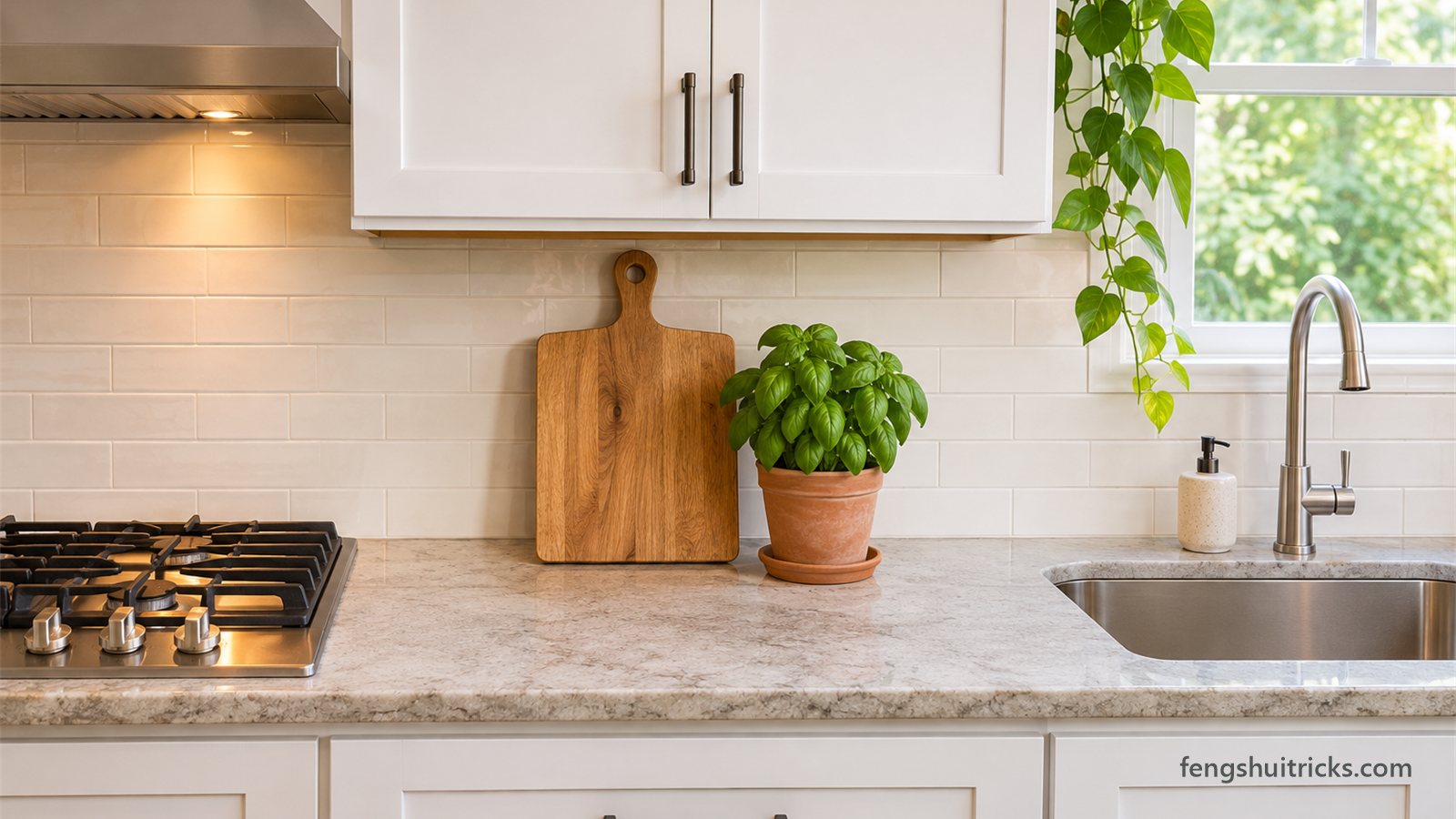
The classic case is a kitchen where the stove (fire) sits right next to or opposite the sink or fridge (water). In the controlling cycle, water puts out fire.
You don’t need to remodel. Add wood between them, because water feeds wood and wood feeds fire, turning a clash into a chain.
A wooden cutting board on the counter, a small herb pot, a green runner or a wooden utensil holder all count. More kitchen fixes are in our kitchen Feng Shui guide.
Using the elements room by room
Each room has a job, so each one leans toward different elements. These are starting points, not rules.
| Room | Lean toward | Go easy on | Simple ways to do it |
|---|---|---|---|
| Bedroom | Earth, soft wood | Fire, water | Warm neutral bedding, a clay lamp base, one plant; keep screens and fountains out |
| Living room | All five, balanced | Whatever already dominates | A plant, a lamp, a ceramic piece, a round metal tray, blue or wavy art |
| Kitchen | Wood, earth | Extra water near the stove | Wooden boards, herbs, stone or tile in earthy tones |
| Home office | Wood, metal | Too much fire | A desk plant, a metal lamp or pen pot, a clear surface |
| Entryway | Water, metal, wood | Heavy earth clutter | A clean mirror (not facing the door), a metal hook rail, a healthy plant |
| Bathroom | Wood, earth | More water | A plant that likes humidity, stone or terracotta accessories |
Want to go one step further? The bagua map assigns an element to each area of your home, so you can match the decor to the area.
Easy ways to add the elements in a rental
You don’t need to paint or drill. Textiles, lighting and a few objects carry all five elements, and they move with you.
- Wood: a potted plant, a jute rug, linen curtains.
- Fire: a warm plug-in lamp, a red or orange throw, LED candles.
- Earth: ceramic planters, a stone coaster set, sand-colored cushions.
- Metal: a brass tray, round metal frames, a lean-to mirror with a metal edge.
- Water: a glass vase, navy pillows, a print of the sea.
This post contains affiliate links. As an Amazon Associate I earn from qualifying purchases.
One easy piece for each element
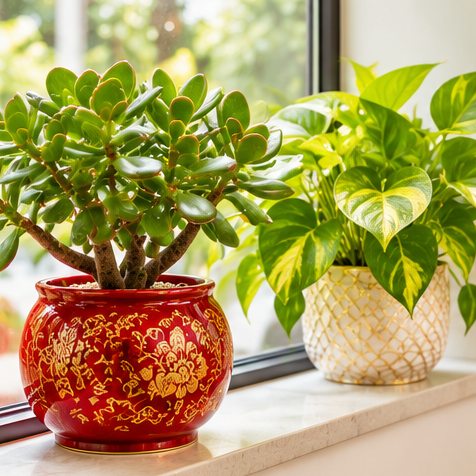 Lucky bambooLiving plants for growth and fresh energy.View on Amazon →
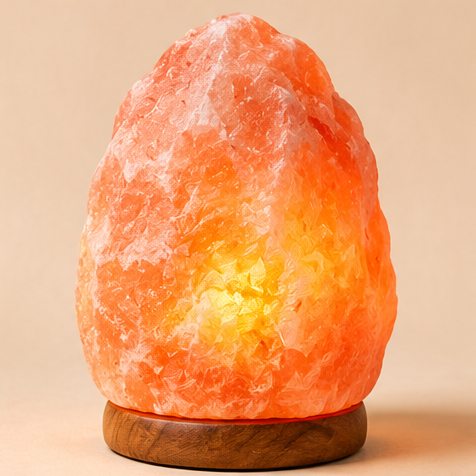 Himalayan salt lampSoft, warm light for calm rooms.View on Amazon →
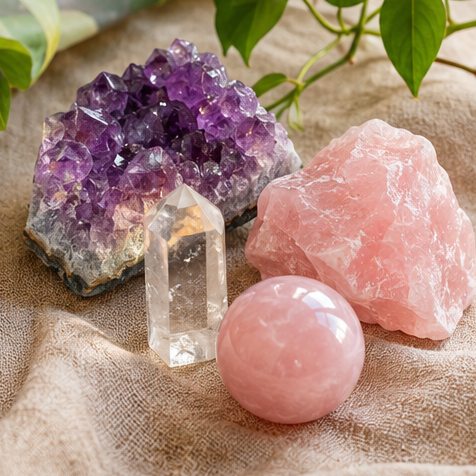 Crystal setAmethyst, rose quartz and clear quartz.View on Amazon →
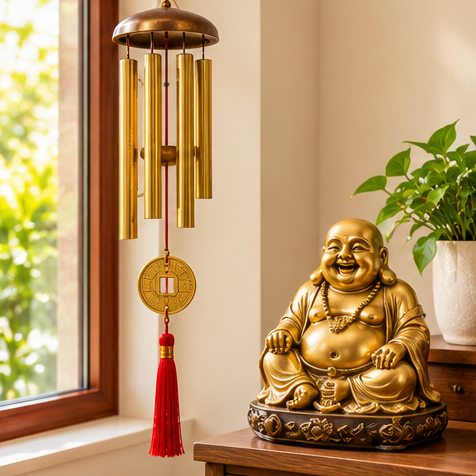 Wind chimeKeeps energy moving at doors and windows.View on Amazon →
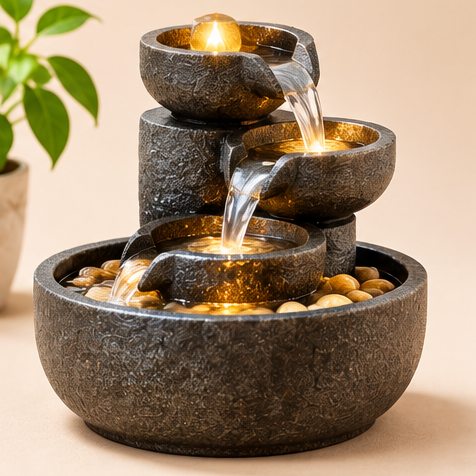 Tabletop fountainFlowing water for the wealth area.View on Amazon →
As an Amazon Associate we earn from qualifying purchases. Prices and availability come from Amazon.
Where Feng Shui schools disagree
You’ll see conflicting charts online. Most of the differences come from two traditions: classical, compass-based Feng Shui, and the Western BTB style that maps the bagua from the front door.
Britannica traces BTB to Thomas Lin Yun’s Black Hat school, founded in Berkeley, California, in the 1980s. It became the most popular style in the West.
- Blue: light blues and teals are often wood in Western practice; deep blue and navy are water almost everywhere.
- Black: nearly always water, though a few charts give it to metal.
- Mirrors: water in most Western books; many classical practitioners treat them as metal, or go by the frame.
- Wood shapes: some charts say rectangles, others say tall columns. Both describe the same upward energy.
- Southern Hemisphere: some practitioners in Australia swap north and south because the sun sits in the north. Most classical schools keep the compass directions unchanged.
Our advice: pick one system and stay with it in your home. Mixing charts is how people end up moving the same plant three times.
How to find your own element
Your birth element comes from the last digit of your Chinese birth year. The Chinese year starts in late January or February, so if your birthday falls before Chinese New Year, use the year before.
| Year ends in | Element | Examples |
|---|---|---|
| 0 or 1 | Metal | 1980, 1991, 2001 |
| 2 or 3 | Water | 1972, 1983, 2012 |
| 4 or 5 | Wood | 1974, 1985, 2024 |
| 6 or 7 | Fire | 1976, 1987, 2026 |
| 8 or 9 | Earth | 1978, 1989, 1999 |
Some people like to add a little of their own element to their personal space. That’s a nice touch, but it comes second to balancing the room itself.
Our birth element guide explains each personal element in detail.
What the elements can and can’t do
Feng Shui is a tradition, not a science, and no candle will fix a money problem by itself. What the elements give you is a clear way to read a room and change how it feels.
For me, Feng Shui brought a calmer home and less clutter during a hard stretch of life. Treat the elements as a design language for comfort, and you’ll get the most from them.
Frequently asked questions
What are the five elements in Chinese Feng Shui?
Wood, fire, earth, metal and water. In Chinese they’re called wuxing, often translated as five phases, because they describe kinds of energy that change into one another rather than physical substances. Feng Shui uses them to read and balance a room through color, shape and material.
How do I know my element in Feng Shui?
Look at the last digit of your Chinese birth year: 0 or 1 is metal, 2 or 3 water, 4 or 5 wood, 6 or 7 fire, and 8 or 9 earth. If you were born in January or early February, check the Chinese New Year date for that year first.
Which Feng Shui element is the luckiest?
None of them on its own. Feng Shui treats luck as coming from balance, so the most helpful element is whichever one your room is missing. A home heavy with metal and glass gains more from a plant or a warm lamp than from yet another silver accent.
Can you have too much of one element?
Yes, and it’s common. A room with red walls, bright lights and several screens has too much fire; an all-white, steel-heavy kitchen has too much metal. Use the draining cycle to calm it: earth tones for fire, water accents for metal, a plant for water.
Where should the water element go in a home?
Most Western practitioners place water features in the north, the career area, or near the entrance, flowing inward. Keep fountains and aquariums out of the bedroom and away from the stove, and keep the water clean and moving.
Conclusion
The five Feng Shui elements work as a set. Each one feeds another and tames another, so the goal is a room where none of them shouts.
Start with the chart, spot the element your room has too much or too little of, and use the gentle draining cycle before reaching for big changes.
If you only do one thing, stand in your most-used room and name the element it lacks. Then add one object for it this week.
Recommended reading
- Feng Shui colors and what they mean
- The four celestial animals in Feng Shui
- An introduction to Flying Star Feng Shui
- Yin and yang in Feng Shui

Bhawana Rathore is the founder of Feng Shui Tricks and a Feng Shui writer and educator. Feng Shui helped her through a hard time, and since 2020 she has been turning it into clear, practical steps, with more than 400 guides and a set of free calculators for arranging your home, understanding lucky symbols and following the Chinese zodiac. She completed the Professional Diploma Course in Feng Shui (CTAA-accredited course) in 2026 and teaches the same ideas on the Feng Shui Tricks YouTube channel. More about Bhawana. If the guides help you, you can buy her a coffee here.