

A Feng Shui map, usually called the bagua map, is a 3×3 grid you lay over your home. Each of its nine squares stands for one part of life, such as wealth, love, career or health.
Below you’ll find the full chart, where the map comes from and what each area asks of you. For the hands-on part, see how to read a bagua map on your floor plan and Western vs traditional bagua maps.
This post contains affiliate links. As an Amazon Associate I earn from qualifying purchases.
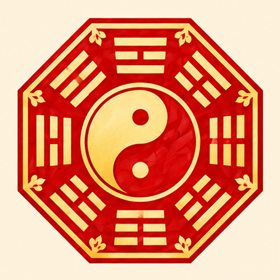
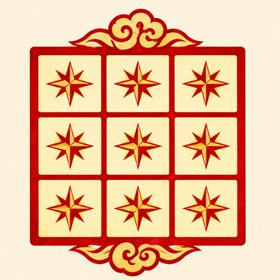
Only needed if you map your home by compass
As an Amazon Associate we earn from qualifying purchases. Prices and availability come from Amazon.
The Feng Shui map at a glance: all 9 bagua areas
Here is the whole map in one table. “Where it sits” gives the spot as you stand at your main door looking in, then the compass direction used by the traditional version.
| Bagua area | Where it sits | Element | Colors |
|---|---|---|---|
| Wealth and prosperity | Back left, southeast | Wood | Purple, green, gold |
| Fame and reputation | Back center, south | Fire | Red, orange |
| Love and relationships | Back right, southwest | Earth | Pink, red, white |
| Family and health | Middle left, east | Wood | Green, teal |
| Center (overall health) | Middle, center | Earth | Yellow, beige |
| Children and creativity | Middle right, west | Metal | White, gray, pastels |
| Knowledge and self-growth | Front left, northeast | Earth | Dark blue, sand |
| Career and life path | Front center, north | Water | Black, navy |
| Helpful people and travel | Front right, northwest | Metal | Gray, silver, white |
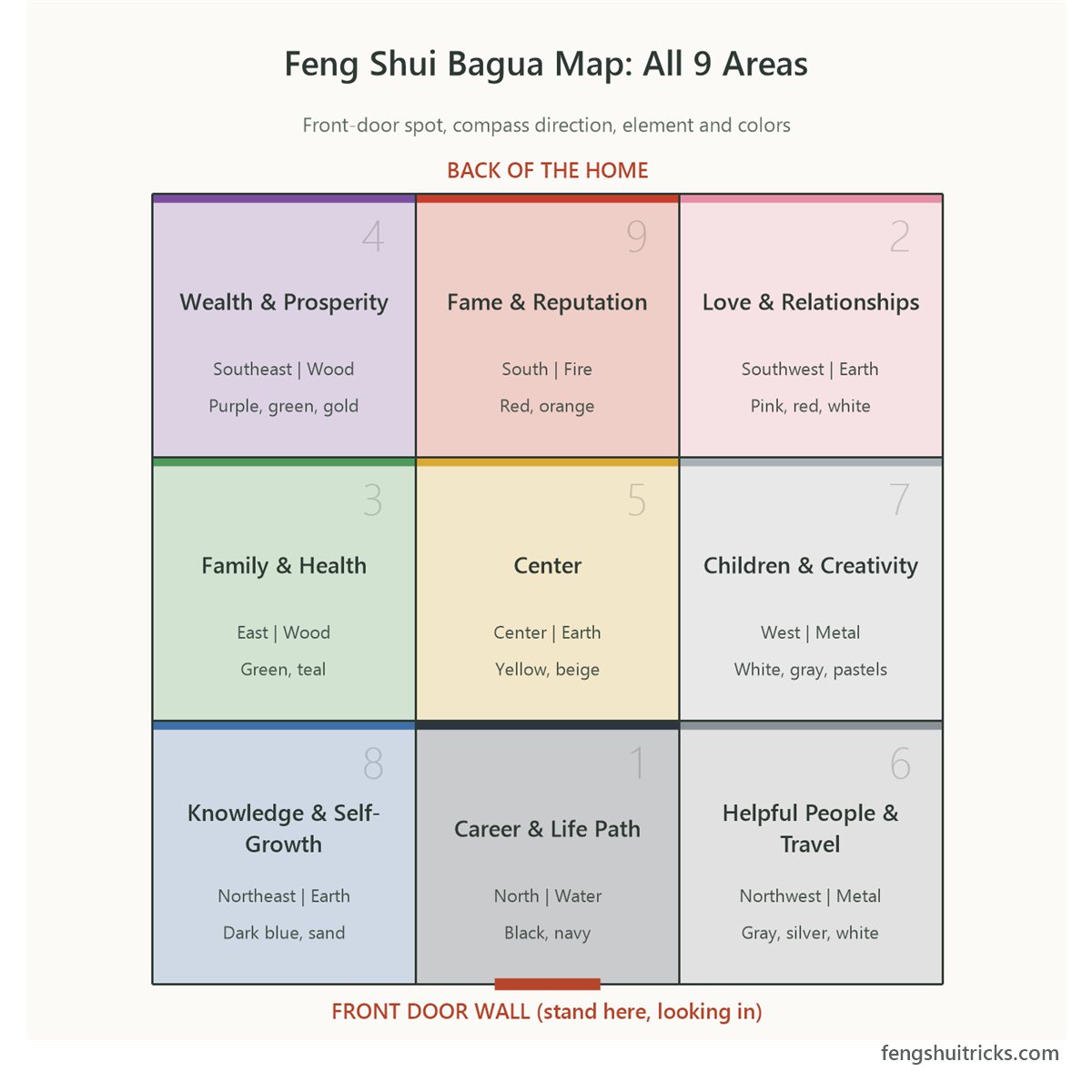
The element column links each area to the five elements of Feng Shui, which is why plants suit Wealth and candles suit Fame.
The small number in each square of the chart comes from the Lo Shu magic square, where every row adds up to 15. Bagua map numbers 1 to 9 explains each one.
Where the bagua map comes from
Bagua means “eight trigrams.” Each trigram is a stack of three lines, solid or broken, and the set of eight trigrams stands for natural forces such as fire, water, wind and mountain.
Solid lines are yang and broken lines are yin. Paired up, the trigrams form the 64 hexagrams of the Yijing, or I Ching. Legend credits the emperor Fuxi with finding them on a tortoise shell.
Eight trigrams around a center give you nine squares. That’s the grid you lay over your home.
On the traditional Feng Shui compass, the luopan, the innermost ring is the bagua. There are two arrangements: Early Heaven and Later Heaven. Homes are read with Later Heaven, the order most modern practice uses.
The Compass School of Feng Shui took shape during China’s Song dynasty (960 to 1279). The simpler front-door grid is a modern Western method from the late 20th century.
Two ways to place the bagua map
Both methods use the same nine areas. They differ in what the grid lines up with.
- Front-door method (Western, also called BTB or Black Hat): the bottom row sits on the wall with your main door. No compass needed. It’s the one most US, UK and Australian decor guides use.
- Compass method (traditional or classical): each area follows a real direction, so Wealth is always the southeast part of the home. You need a reading from a Feng Shui compass or a phone compass.
The two maps only match when your front door faces north. Pick one method and stay with it. Mixing them is the most common reason people find “two wealth corners” and give up.
How to use a bagua map in 5 steps
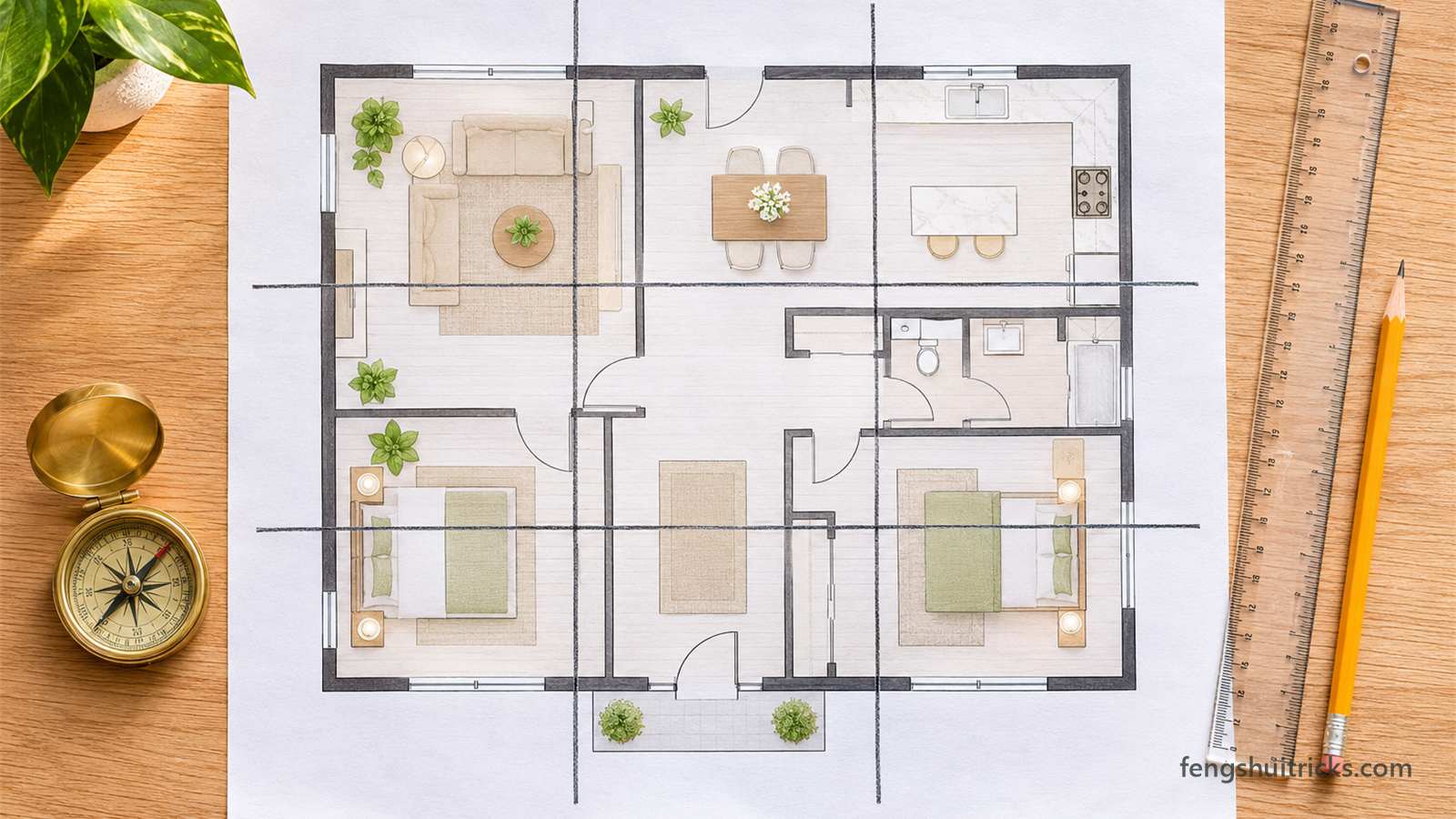
- Get a floor plan of your main floor. A builder’s plan is ideal; a sketch on graph paper works.
- Draw a rectangle around the whole home, including any parts that stick out.
- Split it into thirds both ways, so you have nine equal boxes.
- Line it up. Front-door method: door wall along the bottom. Compass method: turn the grid so each area matches its direction.
- Label the boxes from the chart above, then choose one or two areas to work on.
L-shaped homes, attached garages and apartments each have their own rules. The step-by-step guide linked at the top covers them with diagrams.
The 9 bagua areas, one by one
Each area has an element, a few colors and objects that suit it, and a few things that work against it. Start with whichever matters most to you right now.
Wealth and prosperity (back left, southeast)
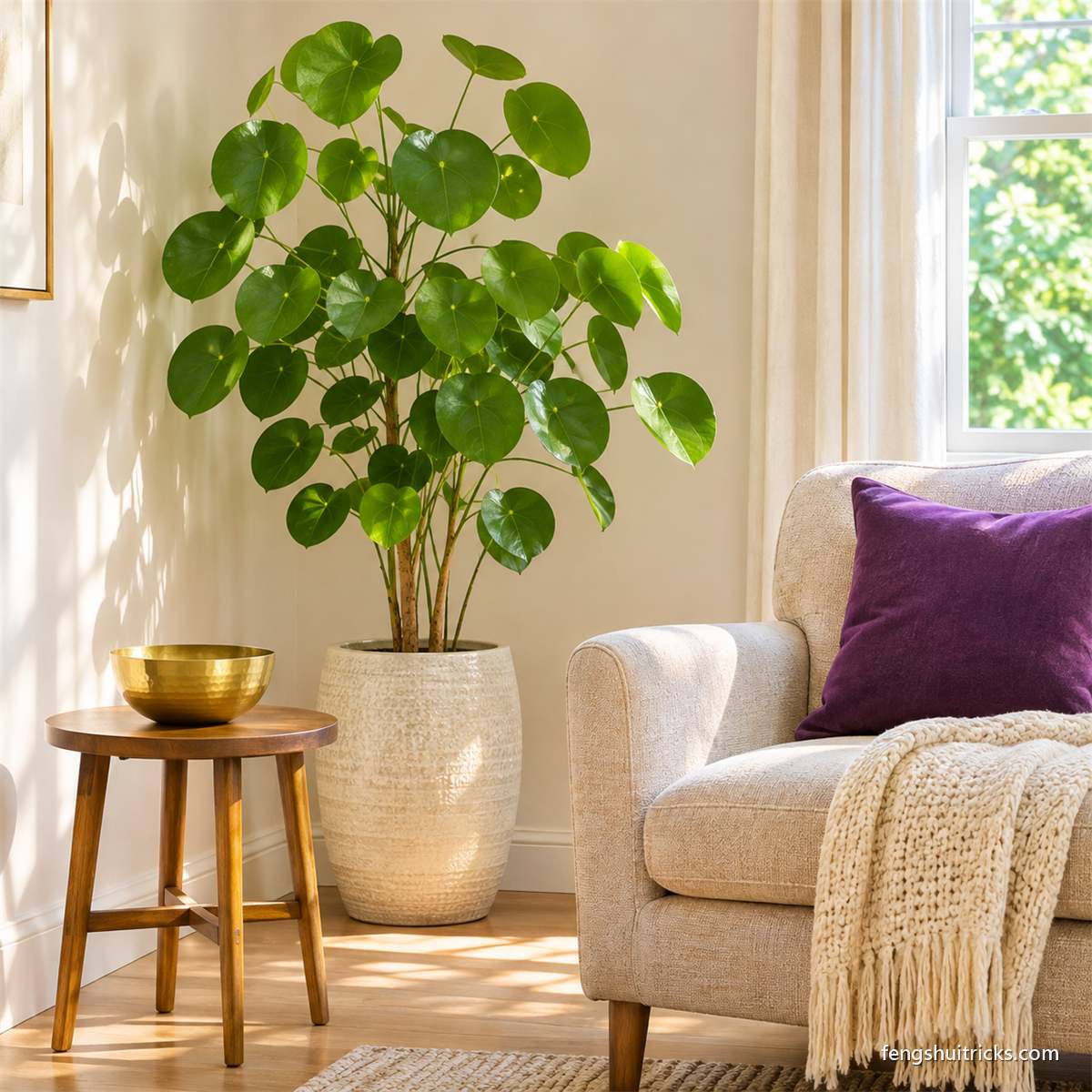
This area is about money, but also abundance in a wider sense: enough time, good food, things that grow. Its element is Wood, so living plants are the classic choice.
Add: a healthy plant with round leaves, purple or green accents, a small fountain. Skip: dead plants, overflowing trash cans, broken items. Ideas for each spot are in how to Feng Shui your wealth corner.
Fame and reputation (back center, south)
Fame is how others see you: your name at work, in your family, in your town. Its element is Fire, so light and warmth help.
Add: good lighting, a red or orange accent, awards or diplomas. Skip: a dark, unused wall and anything water-themed here. More in Feng Shui for fame and reputation.
Love and relationships (back right, southwest)
This area covers partnership and marriage, and your relationship with yourself too. Its element is Earth, steady and supportive.
Add: things in pairs (two lamps, two chairs), soft pink or terracotta, photos of happy times. Skip: single figures, images of people alone, an ex’s gifts. See southwest corner Feng Shui for love.
Family and health (middle left, east)
Family means the people who support you, by blood or by choice, and your roots. Its element is Wood, linked to growth and new starts.
Add: family photos, wooden furniture, green plants. Skip: sharp metal decor and photos of people you’ve fallen out with.
Center (middle of the home)
The center touches every other area, so Feng Shui treats it as the hub of the home and of your overall wellbeing. Its element is Earth.
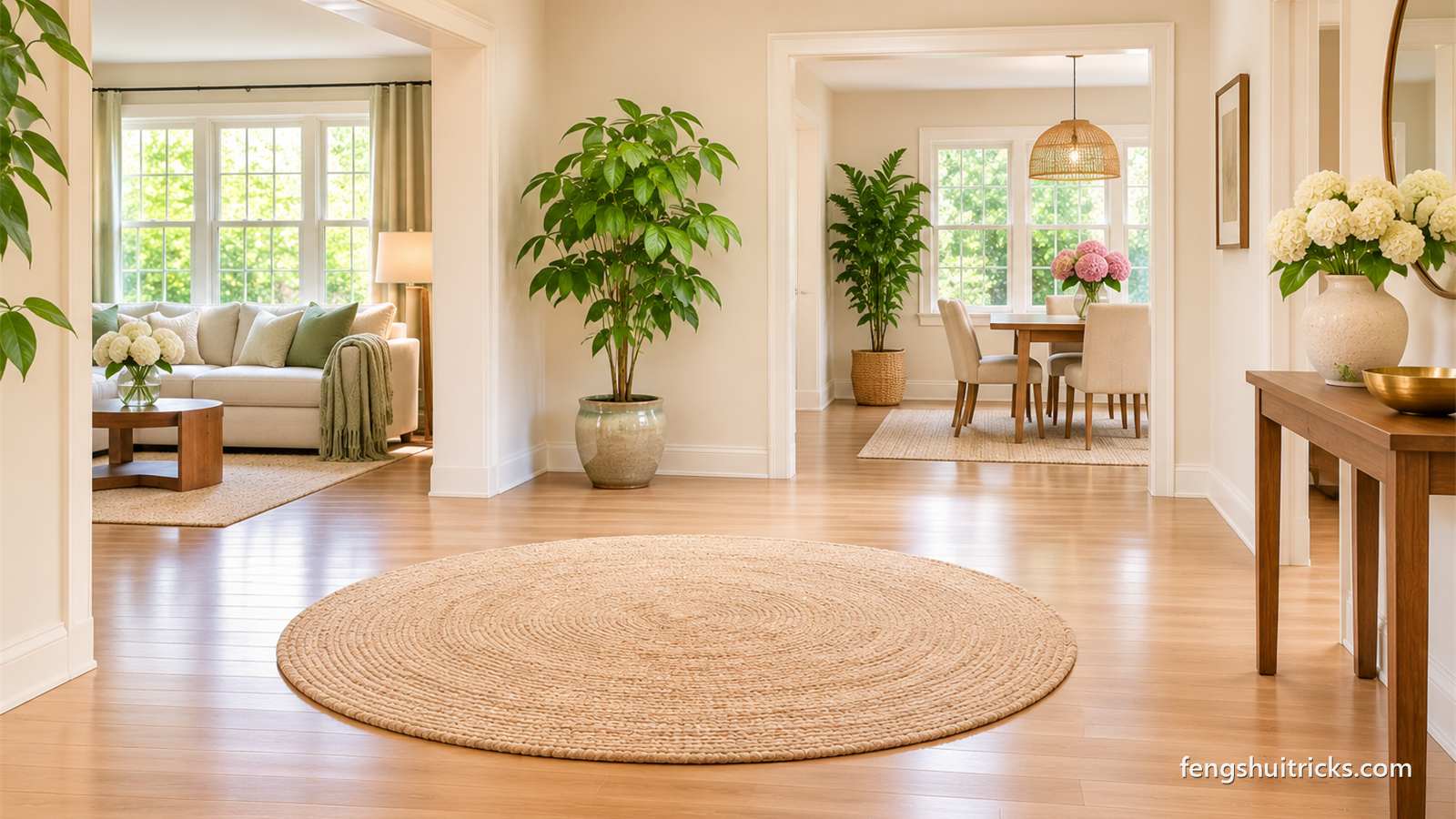
Add: open floor space, a square or round rug, yellow or sand tones. Skip: heavy furniture, storage piles and clutter right in the middle. Tips are in how to Feng Shui the center of your home.
Children and creativity (middle right, west)
This area covers children, projects and anything you bring into being. Its element is Metal, which stands for focus and finishing things.
Add: white or pastel colors, round metal objects, your kids’ art or your own. Skip: unfinished projects piled up and lots of red, since Fire melts Metal.
Knowledge and self-growth (front left, northeast)
Knowledge is learning, study and quiet reflection. Its element is Earth, like a still mountain, so it suits a reading chair or a calm desk.
Add: books, a comfortable seat, dark blue or sand tones. Skip: a TV, loud colors and piles of unread mail.
Career and life path (front center, north)
On the front-door map this is often where the main door sits, which is why the entrance matters so much. Its element is Water, linked to flow and direction.
Add: a clear path to the door, a black or navy doormat, art showing water. Skip: shoes piled behind the door and a door that sticks. See Feng Shui for career success.
Helpful people and travel (front right, northwest)
This area covers mentors, friends, clients, and trips you hope to take. Its element is Metal.
Add: gray or silver accents, a map or photos of places you love, a list of people you’re grateful for. Skip: broken electronics and a cluttered coat closet.
Using the bagua map in a single room
The same grid works on one room. Stand in the doorway and treat the room’s door wall as the bottom row.
- Bedroom: the far-right corner is the Love area of that room, a good spot for a pair of lamps. Our bagua map for the bedroom goes area by area.
- Home office: put the desk where you can see the door, then use the back-left corner of the room for a plant.
- Studio apartment: map the whole unit from its own entry door, not the building’s lobby.
- Desk top: some people even map their desk, with the chair edge as the bottom row.
Room-level mapping is a good start in a rental, where you can’t change much beyond your own space.
Where Feng Shui schools disagree
Feng Shui is a tradition with several schools, not one rulebook. These are the points where you’ll read different answers:
- Southern Hemisphere: most practitioners say don’t flip the compass map in Australia or New Zealand, because north is still north. A minority swap north and south. The front-door method avoids the question.
- Colors: Western guides give Wealth purple; classical practice sticks to Wood colors (green, brown). Both are common.
- Bagua numbers vs your Kua number: the 1 to 9 on the map belong to places. Your personal Kua number comes from your birth year and is a separate calculation.
- Bagua mirrors: the eight-sided mirror is a different thing from the map. Tradition hangs it outside, above the front door, never inside facing a room.
Common bagua map mistakes
- Mixing the two methods. Use the front door or the compass, not both.
- Using the garage or side door because it’s the one you use daily. The map follows the main front door, the one the house was designed around.
- Working on all nine areas at once. Pick one or two, give them a few weeks, then move on.
- Adding cures on top of clutter. A crystal on a messy shelf does little. Clear first, then add.
- Treating it as a promise. The bagua is a way to look at your home with intention. It can’t guarantee money, love or health.
Printable bagua map
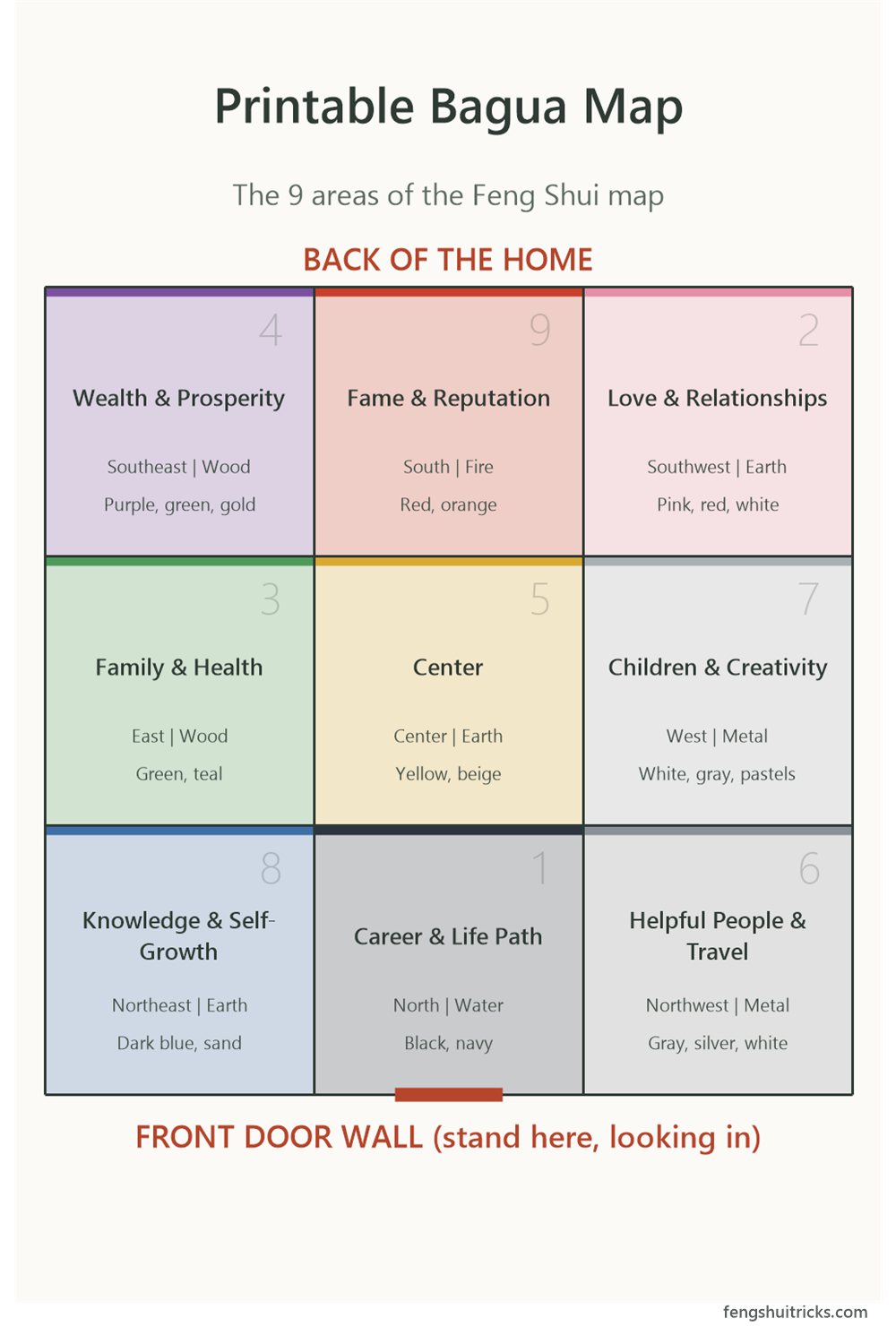
Save or print this chart and hold it over your floor plan, with the door edge at the bottom. It’s sized for a phone screen and a Pinterest board.
Simple cures for any bagua area
Simple cures for any bagua area
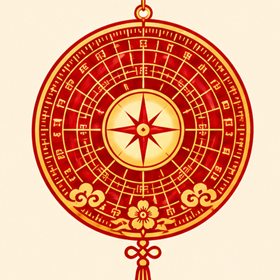 Luo pan compassFind the facing direction of your home.View on Amazon →
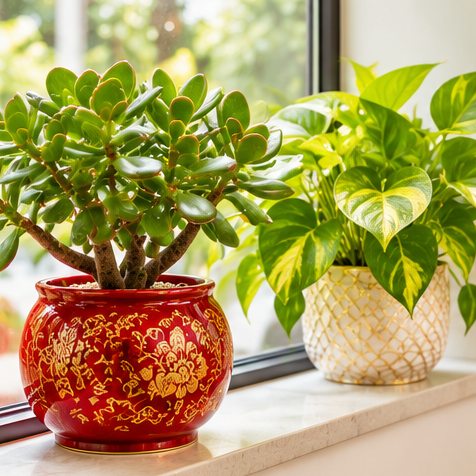 Lucky bambooLiving plants for growth and fresh energy.View on Amazon →
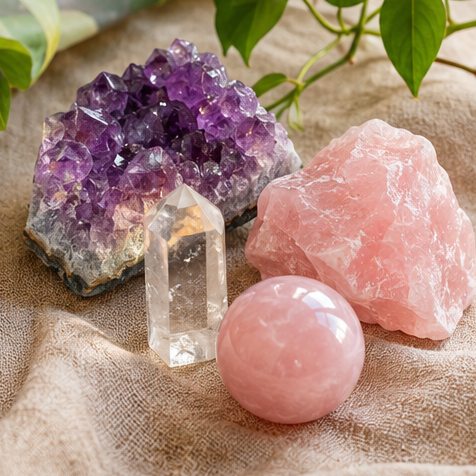 Crystal setAmethyst, rose quartz and clear quartz.View on Amazon →
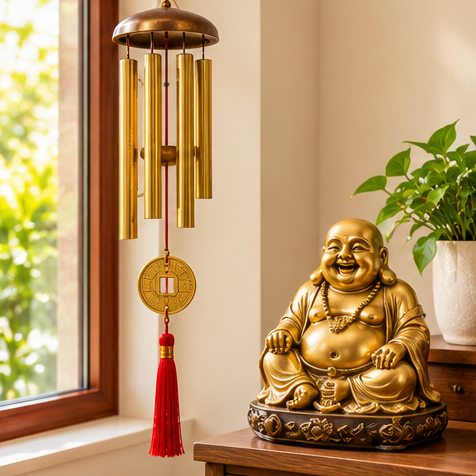 Wind chimeKeeps energy moving at doors and windows.View on Amazon →
As an Amazon Associate we earn from qualifying purchases. Prices and availability come from Amazon.
Frequently asked questions
What is a bagua map in Feng Shui?
A bagua map is a 3×3 grid that divides a home or room into nine areas of life: wealth, fame, love, family, center, children, knowledge, career and helpful people. Bagua means eight trigrams: the eight three-line symbols that sit around the center square.
How do I apply a bagua map to my house?
Draw a rectangle around your floor plan and split it into thirds both ways. With the front-door method, line the bottom row up with the wall that holds your main door. With the compass method, turn the grid so each area matches its compass direction.
Where is the wealth corner in my home?
With the front-door method, it’s the back left corner as you stand at the main door looking in. With the compass method, it’s the southeast part of the home. Use one method only, or you’ll end up with two different wealth corners.
Which bagua area should I start with?
Start with the area that matches what you most want to change, and clear its clutter first. If nothing stands out, begin at the front door (often the Career area) and the center of the home, because every other area connects through them.
Can I use a bagua map in an apartment or one room?
Yes. Map your apartment from its own entry door, not the building’s lobby. You can also map a single room by standing in its doorway and treating the door wall as the bottom row of the grid.
Is a bagua map the same as a bagua mirror?
No. The bagua map is a grid you lay over a floor plan. A bagua mirror is a small eight-sided mirror framed with the trigrams, and tradition hangs it outside, above the front door, to deflect harsh energy. It doesn’t belong inside facing a room.
Conclusion
The bagua map turns your home into nine areas you can work on one at a time. The chart is the same everywhere; what changes is how you line it up.
- Nine areas: eight trigrams plus the center.
- Choose the front-door method or the compass method, and keep to it.
- Clear clutter in an area before adding any cure.
- Start with one or two areas, not all nine.
If you only do one thing: draw the grid on your own floor plan and look at what’s sitting in the area you care about most.
Recommended reading
- Feng Shui wealth boosters and where to place them
- Feng Shui for love: tips for every room
- Feng Shui directions and how to fix bad ones
- Feng Shui colors and what they mean

Bhawana Rathore is the founder of Feng Shui Tricks and a Feng Shui writer and educator. Feng Shui helped her through a hard time, and since 2020 she has been turning it into clear, practical steps, with more than 400 guides and a set of free calculators for arranging your home, understanding lucky symbols and following the Chinese zodiac. She completed the Professional Diploma Course in Feng Shui (CTAA-accredited course) in 2026 and teaches the same ideas on the Feng Shui Tricks YouTube channel. More about Bhawana. If the guides help you, you can buy her a coffee here.