

Feeling emotionally overwhelmed, struggling with sadness, or finding it difficult to move on from a painful experience?
Sometimes, a small daily ritual can help you slow down, reconnect with yourself, and create a sense of calm.
Emotional healing crystals have long been used in spiritual and crystal healing traditions as symbols of love, compassion, protection, confidence, and emotional strength.

From gentle rose quartz to grounding black obsidian, different crystals for emotional healing are associated with different emotional needs.
Some represent forgiveness and self-love, while others symbolize resilience, personal boundaries, or new beginnings.
But which crystal should you choose?
In this guide, we’ll explore 21 emotional healing stones, their traditional meanings, how to use them, and which gemstones are commonly associated with sadness, heartbreak, emotional balance, and difficult life changes.
You’ll also learn how to incorporate these stones into Feng Shui-inspired decorating and mindful daily routines.
Important: Crystal healing is a spiritual or complementary wellness practice. There is no reliable scientific evidence that gemstones can treat trauma, depression, anxiety disorders, or other medical conditions. You can enjoy crystals as meaningful personal objects, but they should not replace appropriate medical or psychological care.


Quick Answer: What Are the Best Crystals for Emotional Healing?
Rose quartz, amethyst, moonstone, smoky quartz, rhodochrosite, and black obsidian are among the most popular crystals traditionally associated with emotional healing.
Rose quartz symbolizes self-love, amethyst represents peace, moonstone is associated with emotional balance, and smoky quartz represents grounding.
For beginners, rose quartz and amethyst are two easy stones to start with.
| Emotional need | Best crystal | Traditional meaning |
|---|---|---|
| Heartbreak and self-love | Rose Quartz | Compassion and forgiveness |
| Emotional overwhelm | Amethyst | Peace and clarity |
| Emotional balance | Moonstone | Stability and acceptance |
| Sadness and low confidence | Citrine | Optimism and motivation |
| Difficult conversations | Amazonite | Harmony and communication |
| Emotional strength | Carnelian | Courage and confidence |
| Past emotional wounds | Rhodochrosite | Self-acceptance |
| Life changes | Labradorite | Transformation |
| Emotional boundaries | Black Obsidian | Protection and grounding |
| Stressful periods | Smoky Quartz | Stability |
| Peaceful expression | Aquamarine | Calm communication |
If you’re new to gemstones, explore our 15 crystals for beginners to understand their traditional meanings and everyday uses.
You can also read our complete guide to Feng Shui crystals and their meanings to learn how different gemstones are incorporated into home decorating and traditional Feng Shui practices.
What Are Emotional Healing Crystals?
Emotional healing stones are natural minerals and gemstones that carry symbolic meanings connected with emotional well-being, spiritual balance, and personal growth.
In crystal traditions, different stones are associated with qualities such as love, patience, courage, protection, and forgiveness.

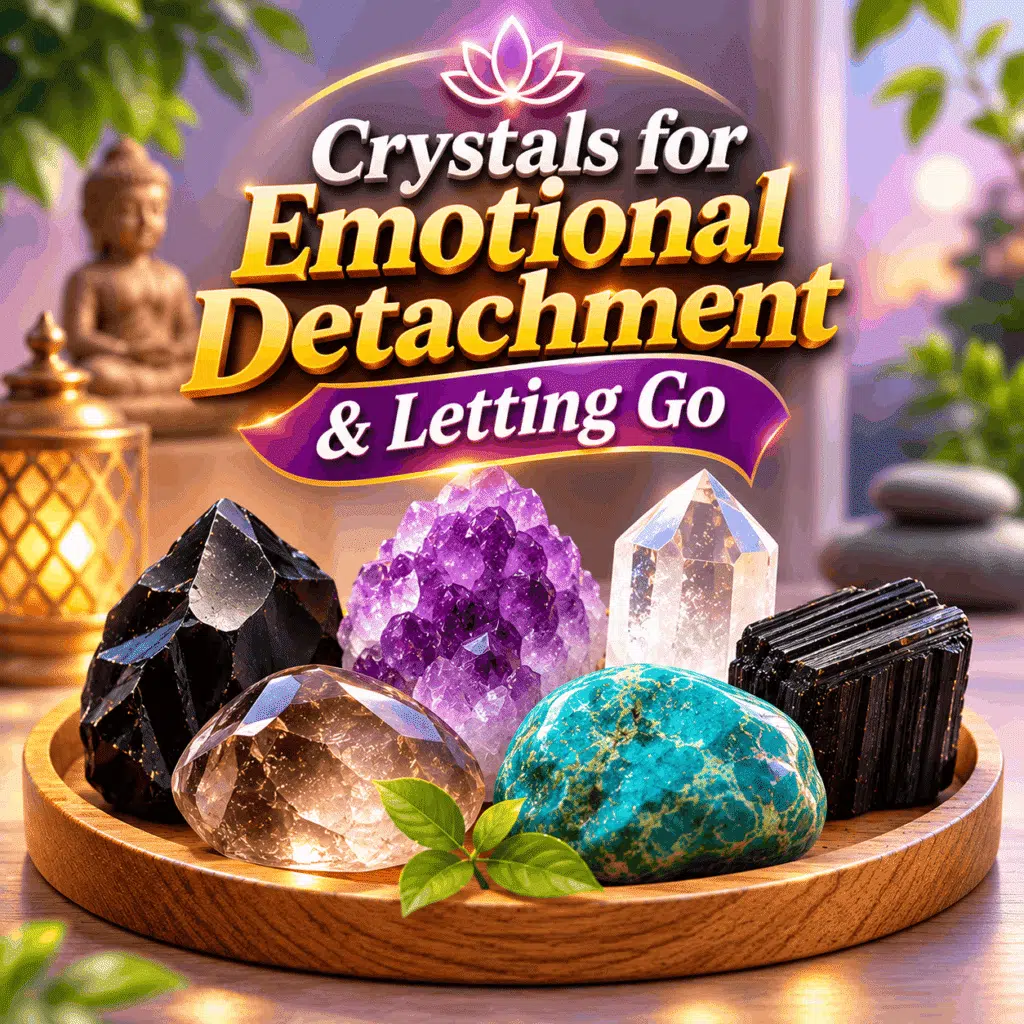
For example:
- Rose quartz represents compassion and unconditional love.
- Amethyst symbolizes tranquility and reflection.
- Black obsidian represents personal boundaries and protection.
- Citrine symbolizes optimism and confidence.
- Moonstone represents emotional balance and new beginnings.
Some people also connect gemstones with the chakra system, particularly the heart chakra, which is traditionally associated with love, relationships, and compassion.
Crystals may become meaningful objects during meditation, journaling, or personal reflection. Their symbolic value can help people focus on intentions and positive habits.
However, gemstones have not been scientifically shown to produce special healing energies that treat emotional or physical illnesses.
For more traditional crystal symbolism, see our guide to healing crystals.
If you prefer wearing gemstones, our 17 crystals to wear daily guide explores popular choices for bracelets, pendants, and everyday jewelry.
How to Choose the Right Crystal for Emotional Balance
Choosing crystals for emotional balance starts with understanding what you want to focus on.
Are you trying to develop self-compassion, become more confident, handle difficult conversations, or establish healthier boundaries?
Instead of purchasing many gemstones, begin with one or two whose traditional meanings feel personally relevant.
For Self-Love and Heartbreak
Choose rose quartz or rhodochrosite.
Both gemstones symbolize compassion, forgiveness, and emotional acceptance.
You can also explore our Chinese love symbols guide for other traditional symbols associated with love and relationships.
For Stress and Emotional Overwhelm
Amethyst, smoky quartz, and howlite are commonly associated with peace and grounding.
For additional decorating and mindfulness ideas, explore our Feng Shui for peace guide.
For Confidence and Emotional Strength
Carnelian, citrine, and tiger’s eye are popular symbolic choices for courage and determination.
For Emotional Stability During Change
Moonstone and labradorite represent acceptance, transformation, and new beginnings.
For Personal Boundaries
Black obsidian and black tourmaline are traditionally associated with protection and grounding.
Our Feng Shui remedies for negative energy guide explains other traditional ways people create a more peaceful environment.
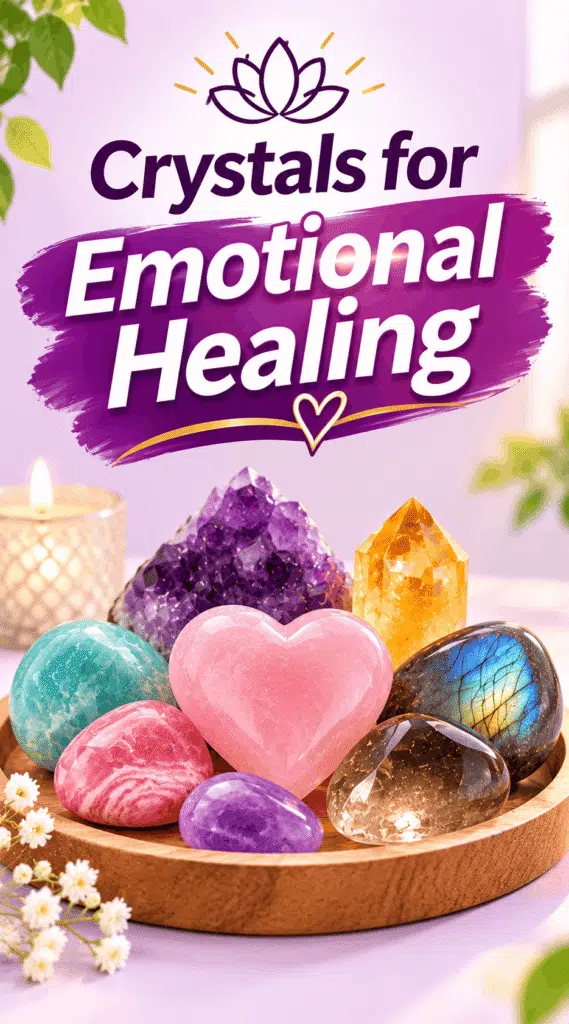
Top 11 Crystals for Emotional Healing and How to Use Them
These 11 gemstones for emotional healing are among the most popular choices in crystal traditions.
Each has a different symbolic meaning, making it easier to select a stone that matches your personal intentions.

1. Amethyst – For Calmness and Emotional Peace
Amethyst is a beautiful purple gemstone traditionally associated with tranquility, spiritual awareness, and peaceful reflection.
Its violet color ranges from pale lavender to deep purple.
In crystal traditions, amethyst is connected with the crown chakra and is commonly chosen by people who want to develop calmer daily routines.
Traditional emotional benefits:
- Symbolizes peace during stressful periods.
- Encourages thoughtful reflection.
- Represents emotional clarity.
- Supports intentions related to patience.
- Reminds you to slow down and rest.
How to use it: Hold an amethyst crystal during meditation or place it on a bedside table.
Use it as a reminder to disconnect from stressful activities before bedtime.
Amethyst is also popular in traditional Feng Shui practices involving peaceful environments. Our Feng Shui for anger management guide explores additional crystals, colors, and decorating ideas associated with calmness.
If you enjoy combining gemstones, read our amethyst stone compatibility guide to understand traditional crystal pairing beliefs.
Expert Tip: Amethyst cannot medically treat anxiety, insomnia, or digestive problems. Although some traditional sources claim it promotes digestive health, these effects have not been scientifically established.
2. Rose Quartz – For Self-Love and Heartbreak
Rose quartz is one of the most widely recognized crystals for emotional healing.
Its soft pink color makes it a popular symbol of compassion, affection, and unconditional love.
In crystal traditions, rose quartz is connected with the heart chakra.
People often choose this gemstone when reflecting on relationships, heartbreak, forgiveness, or self-acceptance.
Traditional emotional benefits:
- Represents self-love.
- Symbolizes forgiveness.
- Encourages compassionate intentions.
- Represents emotional comfort.
- Supports reflection on relationships.
How to use it: Hold a rose quartz crystal during a self-compassion exercise.
Take a few slow breaths and repeat:
I deserve kindness, respect, and healthy relationships.
You can also place rose quartz near your journal or on a bedside table.
If you’re interested in traditional relationship decorating, explore our Feng Shui tips for better relationships.
Rose quartz also pairs symbolically with rhodonite. Our rhodonite crystal meaning guide explains their traditional associations with compassion and love.
Expert Tip: Use rose quartz as a reminder to practice self-care rather than expecting it to erase painful memories.
3. Moonstone – For Emotional Stability and New Beginnings
Moonstone is known for its beautiful shimmering appearance.
Its soft glow comes from an optical effect called adularescence.
In crystal traditions, moonstone symbolizes intuition, acceptance, emotional stability, and new beginnings.
It is a popular crystal for emotional balance, particularly during periods of uncertainty or change.
Traditional emotional benefits:
- Represents emotional stability.
- Symbolizes patience and acceptance.
- Encourages reflection during transitions.
- Represents fresh beginnings.
- Supports intentions related to personal growth.
How to use it: Keep a moonstone crystal nearby while journaling.
Write about one change you’re experiencing and one positive step you can take.
Moonstone is also included in our crystals for beginners guide, along with other popular gemstones.
Although moonstone is sometimes associated with feminine energy in spiritual traditions, it does not scientifically regulate hormones or treat hormonal conditions.
4. Citrine – For Positivity and Emotional Confidence
Citrine is a golden-yellow variety of quartz associated with sunlight, optimism, and abundance.
In Feng Shui-inspired practices, citrine symbolizes positive thinking, confidence, and personal motivation.
People often choose it when they want a reminder to approach challenges with hope.
Traditional emotional benefits:
- Represents optimism.
- Symbolizes confidence.
- Encourages motivation.
- Represents creativity.
- Supports positive intentions.
How to use it: Place a citrine crystal on your work desk.
Before beginning your day, identify one realistic goal and one action you can take toward achieving it.
Citrine is also associated with traditional prosperity practices. Explore our Feng Shui career guide for more ideas about creating a supportive workspace.
You can also read how to use citrine crystals for additional traditional placement and intention-setting ideas.
5. Amazonite – For Emotional Balance and Communication
Amazonite is a blue-green gemstone traditionally associated with harmony, truth, and peaceful communication.
It is commonly chosen by people who want to express their feelings more clearly.
Traditional emotional benefits:
- Represents calm communication.
- Symbolizes honesty.
- Encourages patience.
- Supports intentions related to harmony.
- Represents confidence in self-expression.
How to use it: Hold an amazonite crystal before a difficult conversation.
Think about what you want to communicate and how you can express your feelings respectfully.
For more traditional ideas involving communication and calmness, explore our Feng Shui for anger management guide.
6. Carnelian – For Emotional Strength and Courage
Carnelian is an orange-to-reddish gemstone traditionally associated with confidence, determination, and personal strength.
It is among the popular crystals for emotional strength because of its symbolic connection with courage.
Traditional emotional benefits:
- Represents confidence.
- Symbolizes determination.
- Encourages motivation.
- Supports personal empowerment.
- Represents creative expression.
How to use it: Carry a carnelian stone or keep it near your workspace.
When you feel uncertain, identify one small task you can complete.
For other traditional confidence-related stones, explore the tiger’s eye and carnelian sections in our daily crystal jewelry guide.
7. Rhodochrosite – For Emotional Wounds and Self-Acceptance
Rhodochrosite is a pink-to-red mineral often featuring distinctive bands.
In crystal traditions, it represents compassion, forgiveness, and emotional acceptance.
It is frequently included among emotional healing gemstones because of its symbolic connection with the heart chakra.
Traditional emotional benefits:
- Represents self-compassion.
- Symbolizes forgiveness.
- Encourages emotional acceptance.
- Supports personal reflection.
- Represents kindness toward yourself.
How to use it: Hold a rhodochrosite crystal during a gentle self-compassion exercise.
Ask yourself:
What would I say to a friend who was experiencing the same difficulty?
Then consider offering yourself that same kindness.
Rhodochrosite is often confused with rhodonite because both gemstones feature beautiful pink tones.
Our rhodonite crystal meaning and benefits guide explains their differences, traditional symbolism, and popular uses.
8. Labradorite – For Emotional Resilience and Transformation
Labradorite is famous for its beautiful flashes of blue, green, and gold.
This optical effect is called labradorescence.
In crystal traditions, labradorite symbolizes transformation, resilience, and personal growth.
Traditional emotional benefits:
- Represents resilience.
- Symbolizes transformation.
- Encourages self-discovery.
- Supports acceptance of change.
- Represents confidence during transitions.
How to use it: Place labradorite in a meditation corner.
Use it as a reminder to focus on what you can control while accepting uncertainty.
You can also explore our Feng Shui crystal pyramid guide for decorative crystal arrangements traditionally associated with different intentions.
9. Black Obsidian – For Grounding and Emotional Boundaries
Black obsidian is a naturally occurring volcanic glass with a glossy dark appearance.
In crystal traditions, it symbolizes protection, grounding, and the release of negative influences.
It is a popular symbolic choice for people working on personal boundaries.
Traditional emotional benefits:
- Represents grounding.
- Symbolizes protection.
- Encourages self-awareness.
- Supports personal boundaries.
- Represents emotional strength.
How to use it: Keep a polished black obsidian stone near your journal.
Reflect on one boundary that would help protect your time and well-being.
You can also learn about traditional protective jewelry in our black obsidian bracelet guide.
For more protective gemstone symbolism, explore our crystals to wear daily guide.
10. Smoky Quartz – For Grounding and Emotional Stability
Smoky quartz ranges from light brown to nearly black.
It is traditionally associated with grounding, stability, and the symbolic release of emotional burdens.
Among crystals for emotional balance, smoky quartz is a popular choice because of its earthy appearance.
Traditional emotional benefits:
- Represents stability.
- Symbolizes grounding.
- Encourages patience.
- Supports reflective thinking.
- Represents resilience.
How to use it: Hold smoky quartz during a five-senses grounding exercise.
Identify five things you can see, four you can feel, three you can hear, two you can smell, and one you can taste.
The practical benefit comes from the grounding exercise rather than a proven property of the stone.
For more traditional stone meanings, explore our Feng Shui healing crystals guide.
11. Aquamarine – For Calm Communication and Inner Peace
Aquamarine is a blue-to-blue-green variety of beryl.
Its ocean-like appearance makes it a popular symbol of tranquility, clarity, and peaceful expression.
In crystal traditions, aquamarine is associated with the throat chakra.
Traditional emotional benefits:
- Represents peaceful communication.
- Symbolizes patience.
- Encourages understanding.
- Supports honest expression.
- Represents tranquility.
How to use it: Hold aquamarine before an important conversation.
Practice expressing your feelings without blaming or criticizing others.
Aquamarine is traditionally associated with calmness. You can also explore aquamarine’s traditional properties.
Best Crystals for Emotional Healing: Comparison Table
| Crystal | Traditional purpose | Suggested practice |
|---|---|---|
| Amethyst | Calmness | Evening meditation |
| Rose Quartz | Self-love | Compassion affirmations |
| Moonstone | Emotional balance | Journaling |
| Citrine | Confidence | Daily goal setting |
| Amazonite | Communication | Mindful conversations |
| Carnelian | Courage | Confidence-building habits |
| Rhodochrosite | Acceptance | Self-compassion |
| Labradorite | Resilience | Reflection during change |
| Black Obsidian | Boundaries | Boundary journaling |
| Smoky Quartz | Grounding | Five-senses exercise |
| Aquamarine | Peaceful expression | Communication practice |
Expert Tip: Beginners can start with rose quartz for compassion, amethyst for peaceful reflection, and smoky quartz for grounding.
8 Additional Crystals for Healing Emotional Trauma
People searching for crystals for healing emotional trauma are often looking for comfort, stability, or a meaningful reminder of personal resilience.
In traditional crystal practices, certain gemstones symbolize grounding, courage, compassion, and acceptance.
However, crystals cannot medically heal psychological trauma, PTSD, or depression.
Trauma recovery may involve evidence-based therapy, supportive relationships, and professional care.
For reliable information, read the National Institute of Mental Health guide to PTSD.
If you enjoy gemstones, you can incorporate them into gentle mindfulness practices as personal symbols.
12. Lapis Lazuli – For Self-Awareness
Lapis lazuli is a deep-blue gemstone traditionally associated with wisdom, honesty, and self-expression.
It symbolizes acknowledging your feelings and communicating them clearly.
How to use it: Hold a Lapis Lazuli stone while writing about your present emotional needs.
Avoid forcing yourself to revisit distressing memories.
13. Blue Lace Agate – For Gentle Communication
Blue lace agate is known for its soft blue bands.
In crystal traditions, it represents patience, calm communication, and gentle expression.
How to use it: Keep the stone nearby when practicing slow breathing or preparing for a meaningful conversation.
14. Rose Quartz – For Compassion After Difficult Experiences
Rose quartz symbolizes kindness, forgiveness, and self-love.
It can serve as a reminder to treat yourself compassionately during difficult times.
How to use it: Hold the stone while practicing a short self-kindness meditation.
Remember that forgiveness is a personal choice, not a requirement for recovery.
15. Smoky Quartz – For Grounding
Smoky quartz is traditionally associated with stability and grounding.
How to use it: Hold the stone while paying attention to your surroundings and breathing.
16. Black Tourmaline – For Personal Boundaries
Black tourmaline is traditionally associated with protection and grounding.
The linked guide discusses green tourmaline, which has different symbolic associations from black tourmaline.
How to use it: Keep black tourmaline in your personal space as a reminder to maintain healthy boundaries.
17. Amethyst – For Peaceful Reflection
Amethyst represents tranquility and clarity.
How to use it: Include amethyst in a comfortable meditation routine.
It does not treat PTSD, addiction, depression, or other medical conditions.
18. Lepidolite – For Stability During Change
Lepidolite is a lilac-colored mica mineral traditionally associated with calmness and emotional stability.
How to use it: Keep the stone nearby while journaling about supportive routines and resources.
Although lepidolite can contain lithium within its mineral structure, wearing or holding it does not provide medical lithium treatment.
19. Howlite – For Patience
Howlite is a white gemstone with distinctive gray veining.
It traditionally represents patience, mindfulness, and peaceful reflection.
How to use it: Hold a polished howlite stone during a brief breathing exercise.
For additional traditional grounding stones, explore our hematite jewelry guide.
2 More Emotional Healing Gemstones Worth Exploring
20. Rhodonite – For Forgiveness and Compassion
Rhodonite is a pink-to-red mineral often featuring dark markings.
It is traditionally associated with compassion, forgiveness, and emotional acceptance.
Some people choose rhodonite when reflecting on difficult relationships or personal growth.
How to use it: Place a polished rhodonite stone near your journal.
Reflect on one way you can practice kindness while maintaining healthy boundaries.
Read our complete rhodonite crystal meaning, benefits, and wearing guide for more information.
21. Hematite – For Grounding and Focus
Hematite is an iron oxide mineral with a metallic appearance.
In crystal traditions, it symbolizes grounding, stability, and focus.
How to use it: Wear a polished hematite bracelet or keep a stone near your workspace as a reminder to stay focused on practical goals.
Our hematite jewelry and benefits guide explains traditional uses and care tips.
Which Are the Best Crystals for Emotional Trauma?
There is no scientifically established best crystal for healing trauma, because gemstones have not been shown to treat psychological trauma.
However, people who enjoy traditional crystal symbolism often select:
- Rose Quartz: Self-compassion.
- Smoky Quartz: Grounding.
- Black Tourmaline: Personal boundaries.
- Amethyst: Peaceful reflection.
- Lepidolite: Stability during change.
- Rhodonite: Compassion and forgiveness.
These crystals for trauma healing should be understood as optional symbolic objects rather than treatments.
7 Crystals for Emotional Detachment and Letting Go
Healthy emotional detachment can involve accepting what you cannot control, setting boundaries, and reducing attachment to harmful situations.
It does not mean suppressing all feelings or avoiding relationships.
Several gemstones are traditionally associated with these intentions.

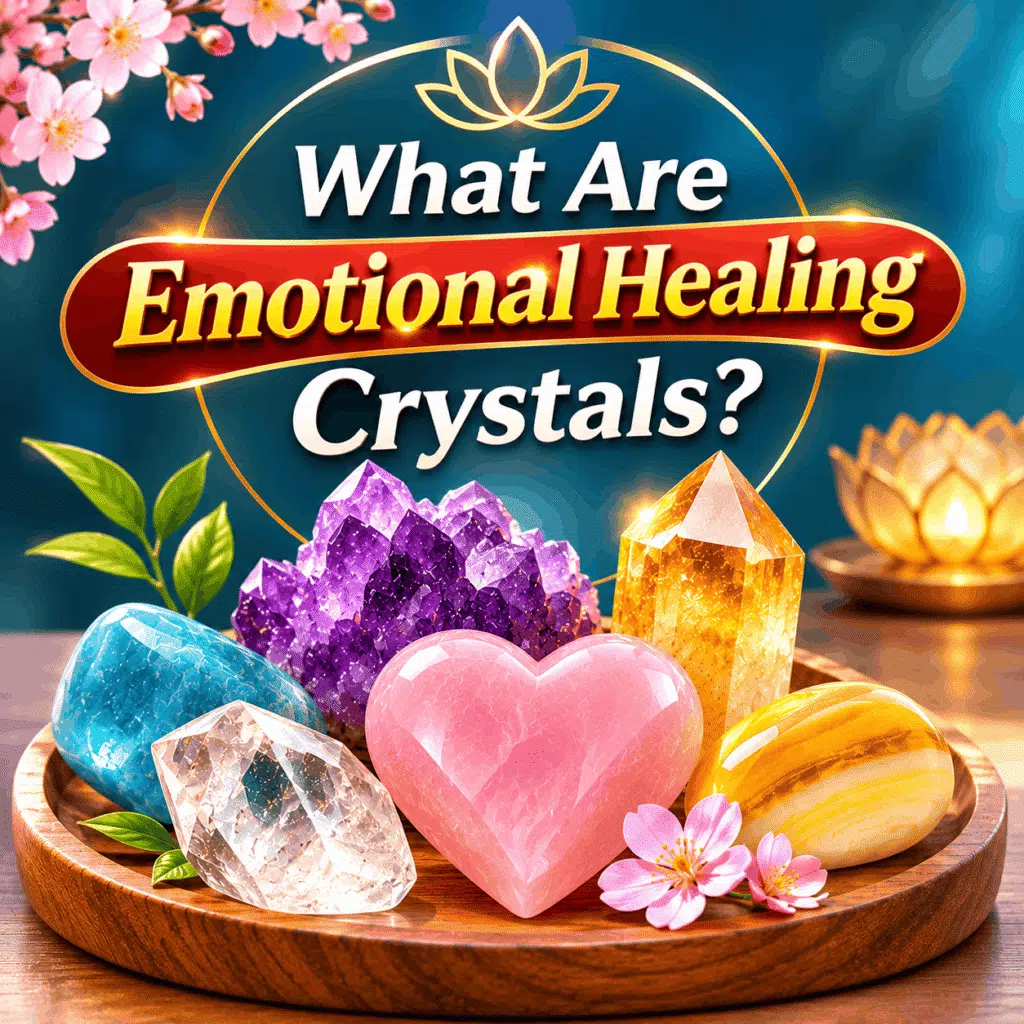
1. Black Obsidian
Obsidian is a dark volcanic glass with a reflective appearance similar to a mirror.
It symbolizes grounding and personal boundaries.
How to use it: Hold the stone while identifying one boundary you want to maintain.
2. Black Tourmaline
Black tourmaline is associated with protection and grounding.
In traditional Feng Shui practices, it is sometimes used symbolically to address negative energy.
How to use it: Keep it in your personal space as a reminder to limit unnecessary stress.
3. Chrysocolla
Chrysocolla is a blue-green mineral associated with peaceful communication and compassion.
How to use it: Keep it near your journal while reflecting on relationship boundaries.
4. Amethyst
Amethyst symbolizes calmness and reflection.
How to use it: Hold the stone during meditation.
For crystal care, read our How To Cleanse Amethyst guide.
5. Clear Quartz
Clear quartz is traditionally associated with clarity and intention.
How to use it: Place a polished stone near your journal and write one personal goal.
You can explore more traditional quartz symbolism in our Feng Shui crystal guide.
6. Citrine
Citrine symbolizes optimism and confidence.
How to use it: Keep it near your workspace as a reminder to focus on realistic personal goals.
7. Smoky Quartz
Smoky quartz symbolizes grounding and emotional stability.
How to use it: Hold it while practicing mindful breathing.
Best Crystals for Sadness, Grief, and Heartbreak
People often search for emotional healing gemstones when experiencing grief, sadness, or relationship difficulties.
Although crystals cannot treat depression or remove grief, their traditional meanings may provide a comforting personal focus.
| Emotional experience | Crystal | Symbolic meaning |
|---|---|---|
| Heartbreak | Rose Quartz | Compassion |
| Grief | Amethyst | Peace |
| Loneliness | Rhodochrosite | Self-acceptance |
| Low confidence | Carnelian | Courage |
| Major changes | Moonstone | New beginnings |
| Emotional overwhelm | Smoky Quartz | Grounding |
| Relationship difficulties | Rhodonite | Forgiveness |
Practical Tip: Combine meaningful objects with helpful activities such as journaling, spending time outdoors, talking to someone you trust, or practicing relaxation.
For a peaceful home environment, our Feng Shui for peace guide explores additional traditional decorating ideas.
Crystals for Emotional Strength and Resilience
Sometimes, emotional well-being is less about feeling calm and more about developing confidence and resilience.
Crystals for emotional strength are traditionally associated with courage, determination, and personal growth.

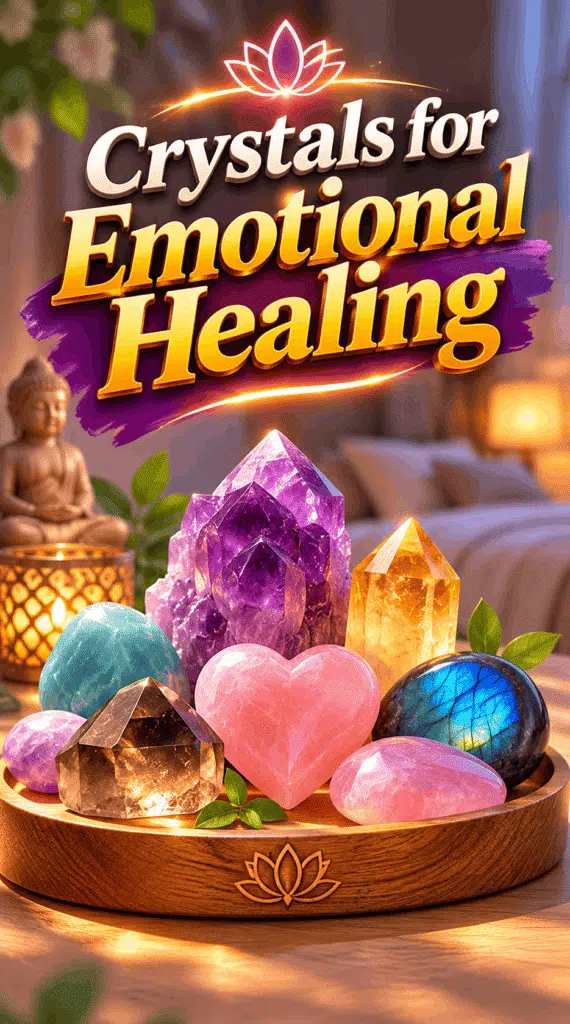
Carnelian symbolizes motivation, labradorite represents transformation, and black obsidian is associated with boundaries.
You can create a simple intention-setting routine:
- Choose a gemstone that represents a quality you want to develop.
- Identify one realistic personal goal.
- Hold the stone while reflecting on that goal.
- Take one practical action.
- Review your progress at the end of the week.
The practical value comes from reflection and action rather than any scientifically proven healing property of the crystal.
If you enjoy gemstone jewelry, our crystals to wear daily guide includes additional traditional choices.
How to Use Emotional Healing Crystals in Daily Life
You don’t need complicated rituals to enjoy emotional balance crystals.
Here are seven simple ways to incorporate them into your routine.
1. Wear Crystal Jewelry
Wear your favorite gemstone as a bracelet, pendant, or necklace.
Choose comfortable, secure jewelry suitable for everyday use.
You can explore our hematite jewelry guide for traditional meanings and practical care tips.
2. Practice Crystal Meditation
Hold a smooth gemstone while sitting comfortably.
Take slow breaths and focus on the present moment.
3. Keep a Crystal Near Your Bed
Rose quartz, amethyst, and moonstone are popular decorative choices.
Place them safely on a stable bedside table.
4. Create an Emotional Wellness Corner
Choose a quiet area with comfortable seating, soft lighting, and meaningful objects.
You might include a crystal, journal, or calming artwork.
A decorative Feng Shui crystal pyramid is another traditional option.
5. Combine Crystals With Journaling
Choose a gemstone and write about its symbolic meaning.
For example, use rose quartz as a reminder to practice compassion or carnelian as a symbol of confidence.
6. Practice Grounding Exercises
Hold a smooth stone and notice its shape, texture, and temperature.
Focus on your surroundings and breathing.
7. Use Crystals Safely
Avoid swallowing crystal powders, placing unknown minerals in drinking water, or heating stones without understanding their physical properties.
Some minerals can be damaged by water, salt, heat, or direct sunlight.
Where Should You Place Emotional Healing Crystals in Feng Shui?
In Feng Shui-inspired decorating, gemstone placement often reflects the intention associated with a room.
| Location | Crystal | Traditional intention |
|---|---|---|
| Bedroom | Rose Quartz | Love and compassion |
| Meditation area | Amethyst | Peaceful reflection |
| Living room | Amazonite | Harmony |
| Home office | Citrine | Motivation |
| Personal corner | Smoky Quartz | Grounding |
| Entrance | Black Obsidian | Protection |
These are traditional symbolic suggestions rather than scientifically proven methods of changing emotional health.
For additional decorative options, explore our Feng Shui crystal ball guide.
You can also learn about Feng Shui crystal pyramids and their traditional placement meanings.
What Crystals Cannot Be Together?
Some crystal traditions suggest avoiding certain combinations because their symbolic qualities are considered different.
However, there is no scientific evidence that placing two gemstones together creates harmful energy.
Examples sometimes discussed in crystal communities include:
- Carnelian and Amethyst.
- Tiger’s Eye and Amazonite.
- Orange Calcite and Blue Lace Agate.
- Blue Lace Agate and Red Jasper.
- Clear Quartz and Green Aventurine.
- Tiger’s Eye and Smoky Quartz.
These are not universal rules.
You can combine gemstones according to personal preference, comfort, and decorating style.
The more important consideration is physical compatibility, because harder stones may scratch softer minerals.
How to Cleanse and Care for Emotional Healing Stones
Crystal cleansing is a traditional symbolic practice.
Some people include it in meditation or intention-setting routines.
Popular symbolic methods include sound, moonlight, and quiet reflection.
However, not every gemstone is suitable for water, salt, direct sunlight, or heat.
For everyday care, gently wipe stones with a soft cloth and store delicate minerals separately.
Our How To Cleanse Amethyst guide discusses traditional cleansing methods.
Before using salt, read our list of crystals that can go in salt to understand which stones require extra care.
Some Feng Shui traditions also incorporate incense into symbolic cleansing rituals. Our incense cleansing guide explains the traditional practice.
Always consider ventilation and fire safety when burning incense.
Expert Tip: Crystal cleansing is a symbolic practice, not a scientifically established way of removing negative energy.
Frequently Asked Questions About Emotional Healing Crystals
1. What Is the Best Crystal for Emotional Healing?
Rose quartz is one of the most popular traditional choices because it symbolizes compassion and self-love. Amethyst and smoky quartz are also widely associated with peaceful reflection and grounding.
2. Which Crystal Is Best for Emotional Balance?
Moonstone, amazonite, and smoky quartz are commonly associated with emotional balance in crystal traditions.
3. What Crystals Are Good for Emotional Trauma?
Rose quartz, amethyst, smoky quartz, and black tourmaline are traditional symbolic choices. However, no gemstone has been scientifically proven to treat psychological trauma or PTSD.
4. Which Gemstone Symbolizes Emotional Strength?
Carnelian is traditionally associated with courage and motivation. Labradorite represents resilience, while black obsidian symbolizes grounding and personal boundaries.
5. What Is the Best Crystal for Sadness?
Rose quartz, amethyst, and rhodochrosite are popular stones associated with comfort and compassion.
6. Can Crystals Help With Emotional Stability?
Crystals may serve as meaningful reminders during meditation, journaling, and self-care. However, they have not been scientifically shown to regulate emotions directly.
7. Which Crystal Is Associated With the Heart Chakra?
Rose quartz, rhodochrosite, and rhodonite are traditionally associated with the heart chakra.
8. Can I Wear Multiple Emotional Healing Crystals Together?
Yes. There is no scientific evidence that combining different gemstones creates harmful energy.
9. How Many Emotional Healing Crystals Should Beginners Use?
One or two stones are enough. Rose quartz and amethyst are popular beginner choices.
10. Can Emotional Healing Crystals Replace Therapy?
No. Crystals are not substitutes for psychotherapy, medication, or other evidence-based treatment.
11. Which Crystals Symbolize Letting Go of the Past?
Smoky quartz, black obsidian, moonstone, and amethyst are traditionally associated with grounding, acceptance, and new beginnings.
12. What Is the Best Crystal for Emotional Healing After Heartbreak?
Rose quartz is traditionally associated with self-love and compassion. Rhodonite and rhodochrosite also symbolize forgiveness and emotional acceptance.
13. What Crystals Are Associated With Emotional Strength?
Carnelian, labradorite, hematite, and black obsidian are popular traditional choices.
14. Can I Sleep With Emotional Healing Crystals Nearby?
You can keep a suitable crystal on a stable bedside table as a decorative or meaningful object. There is no reliable evidence that crystals directly improve sleep.
15. How Often Should I Cleanse Emotional Healing Stones?
There is no medically or scientifically required cleansing schedule. For physical maintenance, clean gemstones according to their mineral properties and how frequently you handle them.
Final Thoughts: Choosing the Best Crystals for Emotional Healing
Crystals for emotional healing have long been used symbolically in spiritual traditions for their associations with compassion, peace, strength, and personal transformation.
Rose quartz represents love, amethyst symbolizes tranquility, moonstone reflects new beginnings, and smoky quartz is associated with grounding.
Other emotional healing gemstones, including carnelian, rhodonite, labradorite, and black obsidian, are traditionally connected with courage, resilience, and personal boundaries.
The best approach is to choose a stone that feels meaningful and incorporate it into practical self-care habits.
Whether you wear a crystal bracelet, meditate with a gemstone, or place a beautiful stone in your home, let it remind you to practice patience, self-compassion, and healthy boundaries.
Remember: Emotional well-being is supported by healthy routines, meaningful relationships, and professional care when needed—not by crystals alone.

Bhawana Rathore is the founder of Feng Shui Tricks and a Feng Shui writer and educator. Feng Shui helped her through a hard time, and since 2020 she has been turning it into clear, practical steps, with more than 400 guides and a set of free calculators for arranging your home, understanding lucky symbols and following the Chinese zodiac. She completed the Professional Diploma Course in Feng Shui (CTAA-accredited course) in 2026 and teaches the same ideas on the Feng Shui Tricks YouTube channel. More about Bhawana. If the guides help you, you can buy her a coffee here.