
Real vs Fake Plants Feng Shui guide. Discover the pros, cons, wealth benefits, best placements, and expert recommendations for creating positive energy at home.
Plants have been used in Feng Shui for centuries to improve energy flow, strengthen the Wood Element, and symbolize growth and prosperity.
Walk into almost any well-designed Feng Shui home and you will usually find healthy greenery somewhere in the space. A thriving Money Tree near the entrance, Lucky Bamboo on a desk, or a Jade Plant in the wealth corner are all common examples.


Because modern lifestyles are busy, many homeowners choose artificial plants instead. They never need watering, rarely lose their appearance, and can instantly make a room feel more inviting.
Quick Answer
In Feng Shui, real plants are generally considered more powerful than artificial plants because they contain living energy and symbolize growth, abundance, prosperity, and renewal. However, high-quality artificial plants can still be used in certain situations when real plants are difficult to maintain. The best choice depends on your home, lifestyle, and Feng Shui goals.
This raises an important question:
Are artificial plants bad Feng Shui?
Many people believe that only living plants can create positive energy, while others argue that modern artificial plants are realistic enough to provide similar benefits.
At Fengshuitricks, we regularly receive questions about using artificial plants in apartments, offices, bedrooms, and wealth corners. The reality is that Feng Shui is more nuanced than many people think.
In this guide, we will compare real plants vs artificial plants in Feng Shui, explain the advantages and disadvantages of each option, and help you decide which choice is best for your home.
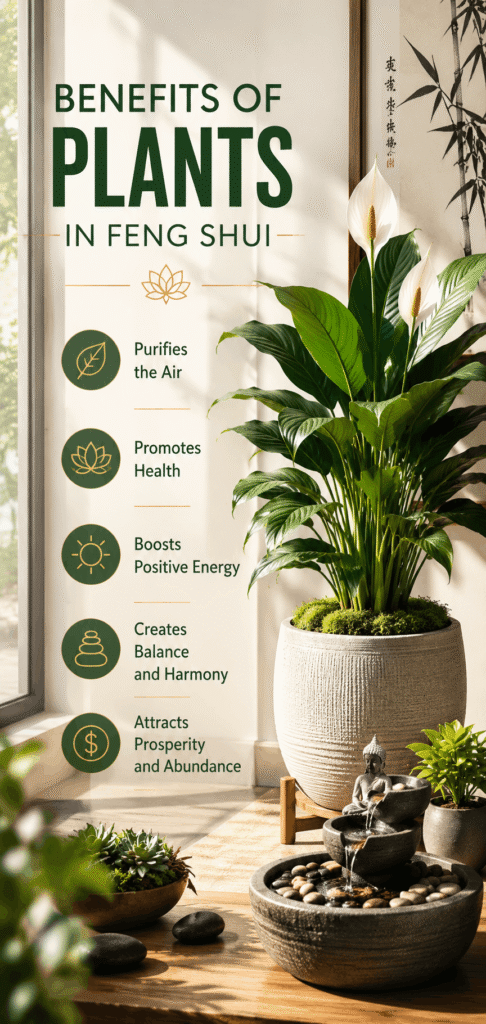
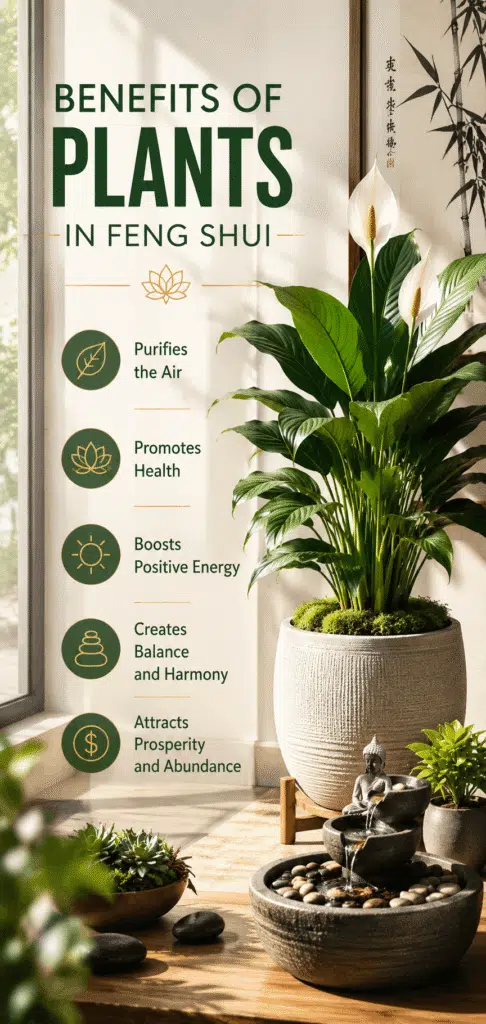
Why Plants Matter in Feng Shui
Plants represent the Wood Element, one of the Five Elements used in traditional Feng Shui.
The Wood Element is associated with:
- Growth
- Vitality
- Expansion
- Creativity
- Health
- Prosperity
- New opportunities
A healthy plant constantly grows and changes. This natural process symbolizes personal development, financial growth, and positive transformation.
This is one reason why Feng Shui practitioners often recommend plants when someone wants to improve:
- Wealth
- Career opportunities
- Family harmony
- Health
- Personal growth
Benefits of Plants in Feng Shui
| Plant Characteristic | Feng Shui Meaning |
|---|---|
| New Growth | New opportunities |
| Green Leaves | Healing energy |
| Strong Roots | Stability |
| Healthy Appearance | Positive Chi |
| Upward Growth | Success and advancement |
| Long Life | Longevity and prosperity |
Plants are unique because they bring living energy into a home. Unlike furniture or decorations, they actively interact with their environment.
Real vs Fake Plants Feng Shui Key Differences
The biggest difference from a Feng Shui perspective is simple:
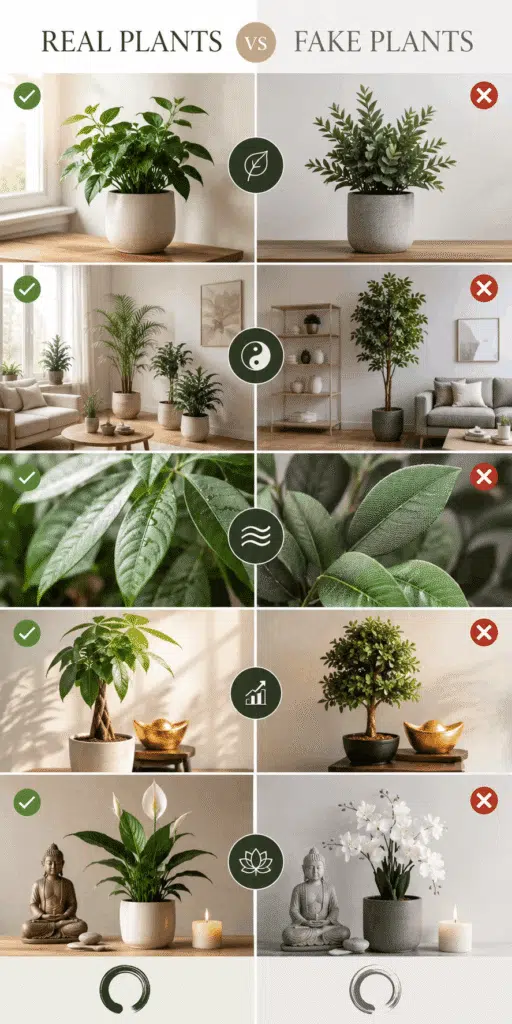
Real plants are alive.
Artificial plants are decorative objects.
Real plants continuously absorb water, nutrients, and sunlight while producing new growth.
Artificial plants remain unchanged.
This distinction is important because Feng Shui places significant value on movement, vitality, and life force energy.
| Feature | Real Plants | Artificial Plants |
|---|---|---|
| Living Energy | Yes | No |
| Growth Energy | Strong | None |
| Air Purification | Yes | No |
| Wealth Symbolism | Excellent | Moderate |
| Maintenance | Higher | Low |
| Durability | Variable | Long-lasting |
| Feng Shui Value | Excellent | Good if realistic |
Although real plants usually win from a traditional Feng Shui perspective, artificial plants are not automatically considered bad.
Why Real Plants Are Preferred in Feng Shui
Traditional Feng Shui strongly favors real plants because they generate what practitioners call Sheng Chi, or life-enhancing energy.
A healthy plant constantly produces this energy through growth and vitality.
Every new leaf can symbolically represent:
- New opportunities
- Business growth
- Financial expansion
- Personal development
- Improved relationships
This is why wealth-enhancing plants are among the most commonly recommended Feng Shui cures.
Benefits of Real Plants
They Symbolize Continuous Growth
One of the most important Feng Shui principles is growth.
A thriving plant demonstrates:
- Progress
- Expansion
- Opportunity
- Renewal
These qualities align perfectly with the goals most people have for their homes and careers.
They Improve Indoor Environments
Real plants contribute to healthier indoor spaces.
A fresher environment often feels more vibrant and welcoming.
In Feng Shui, a healthy environment helps positive energy move freely throughout the home.
They Strengthen the Wood Element
The Wood Element governs:
- Growth
- Family
- Health
- Creativity
- Prosperity
Real plants naturally strengthen this element.
They Create Positive Visual Energy
Healthy greenery instantly makes a room feel more alive.
This positive visual impact contributes to the overall atmosphere of a home.
Best Real Plants for Feng Shui
Not all plants are equally popular in Feng Shui.
Some plants have become strongly associated with prosperity and abundance.
Top Feng Shui Wealth Plants
| Plant | Feng Shui Meaning |
|---|---|
| Money Tree | Wealth and prosperity |
| Jade Plant | Financial growth |
| Lucky Bamboo | Good fortune |
| Golden Pothos | Positive energy |
| Rubber Plant | Stability and abundance |
| Areca Palm | Fresh energy |
| Peace Lily | Harmony and balance |
Many homeowners use our Lucky Plant Calculator to identify plants that match their personal Feng Shui profile.
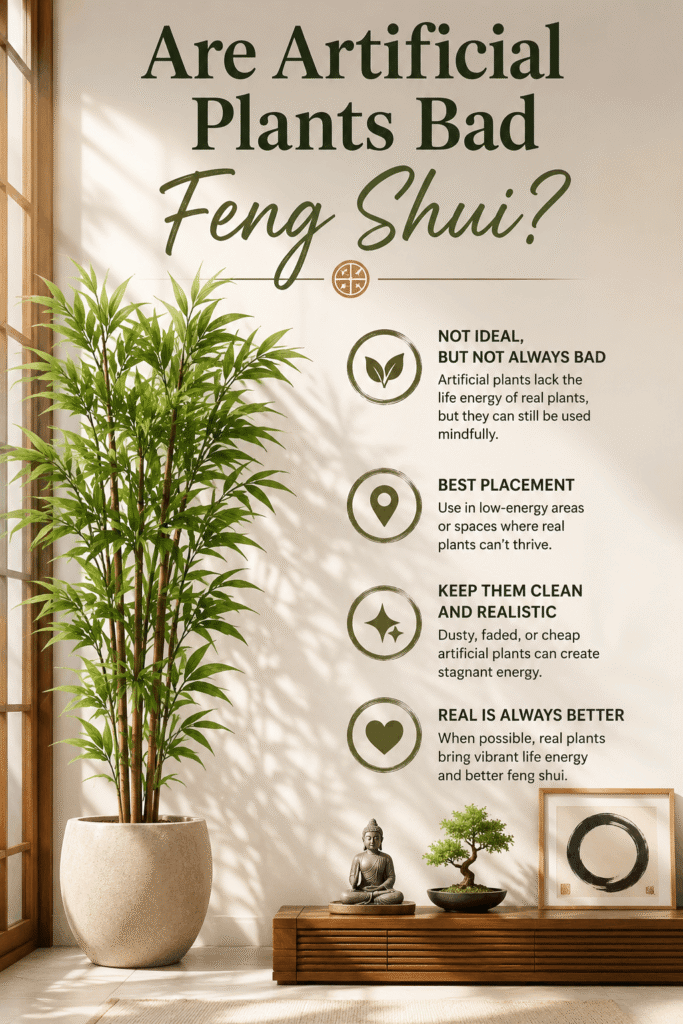
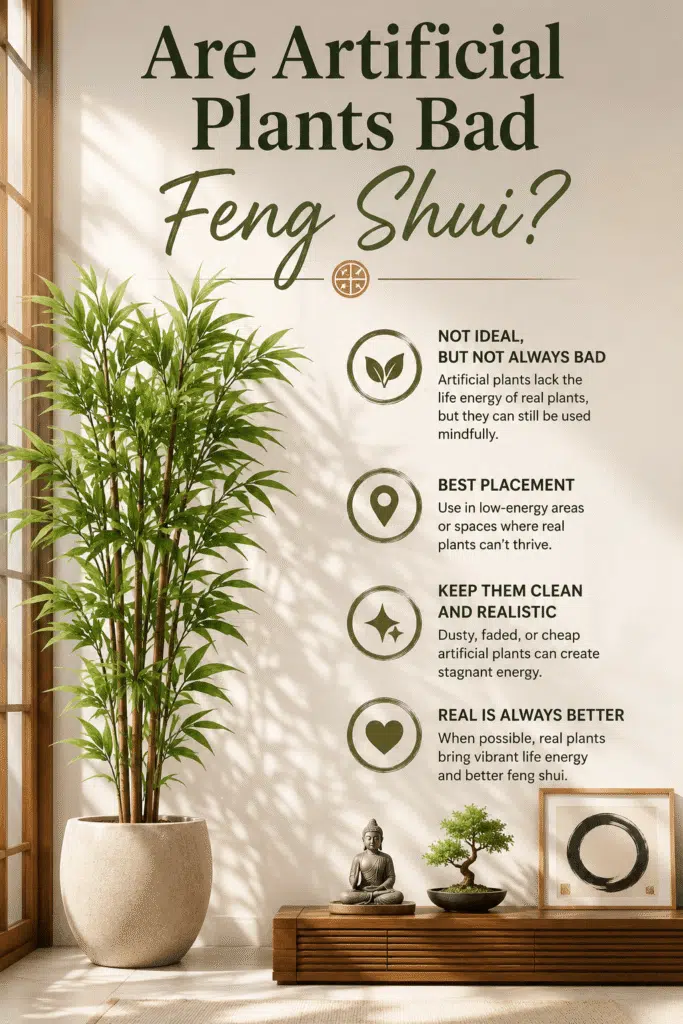
Are Artificial Plants Bad Feng Shui?
This is where many people become confused.
The answer is:
No, artificial plants are not automatically bad Feng Shui.
Modern Feng Shui practitioners generally accept artificial plants when used correctly.
What matters most is quality.
A beautiful, realistic artificial plant is usually preferable to a dying real plant.
When Artificial Plants Are Good Feng Shui
Although traditional Feng Shui prefers living plants, artificial plants can still be useful in certain situations.
Modern homes often have areas where real plants struggle to survive due to poor lighting, lack of airflow, or busy lifestyles.
In these situations, a high-quality artificial plant may be a better choice than a neglected real plant.
Situations Where Artificial Plants Make Sense
Low-Light Areas
Many hallways, bathrooms, and apartment corners receive very little natural light.
Instead of forcing a plant to survive in unsuitable conditions, a realistic artificial plant can provide visual balance.
Frequent Travelers
If you travel regularly and cannot maintain plants properly, artificial greenery may be a practical alternative.
Allergy Concerns
Some homeowners prefer artificial plants because they eliminate concerns about pollen, soil mold, or insects.
Commercial Spaces
Hotels, reception areas, retail stores, and offices often use premium artificial plants because they require little maintenance while maintaining an attractive appearance.
Characteristics Of Good Artificial Plants
Not all artificial plants are created equal.
The quality of the plant significantly affects its Feng Shui value.
Look For
- Realistic leaf textures
- Natural-looking colors
- Proper proportions
- High-quality materials
- Clean appearance
Avoid
- Dusty plants
- Faded colors
- Broken stems
- Cheap plastic leaves
- Obviously fake designs
A dusty artificial plant can create stagnant energy and make a room feel neglected.

Real Flowers vs Artificial Flowers In Feng Shui
Flowers have long been associated with beauty, romance, happiness, and abundance.
Just like plants, fresh flowers are generally preferred over artificial flowers.
Why Fresh Flowers Are Preferred
Fresh flowers represent:
- Life
- Beauty
- Renewal
- Joy
- Positive energy
Their fragrance and natural appearance contribute to a vibrant environment.
Feng Shui Flower Comparison
| Flower Type | Feng Shui Rating |
|---|---|
| Fresh Flowers | Excellent |
| Silk Flowers | Good |
| Premium Artificial Flowers | Good |
| Dried Flowers | Poor |
| Wilted Flowers | Very Poor |
One common Feng Shui recommendation is removing flowers as soon as they begin to wilt.
Dying flowers symbolize declining energy and should not be left on display.
Can Artificial Plants Attract Wealth?
This is one of the most frequently asked Feng Shui questions.
Artificial plants do not generate living energy the way real plants do.
However, they can still symbolize prosperity when used correctly.
The symbolic meaning of a plant still exists even if the plant itself is not alive.
For example, an artificial Money Tree placed in a wealth corner may still serve as a visual reminder of abundance and financial goals.
However, a healthy living Money Tree is generally considered more powerful.
Wealth Attraction Comparison
| Feature | Real Plant | Artificial Plant |
|---|---|---|
| Wealth Symbolism | Strong | Moderate |
| Growth Energy | Strong | None |
| Visual Impact | Strong | Strong |
| Prosperity Energy | High | Medium |
| Maintenance | High | Low |
Best Locations For Real Plants
Placement matters just as much as plant selection.
Living Room
The living room is one of the best locations for healthy plants.
Plants help soften harsh angles and create a more welcoming atmosphere.
Home Office
Plants symbolize growth and career advancement.
Many Feng Shui consultants recommend placing healthy plants near workspaces.
If you want to improve career energy, you can also check your personal directions using the Lucky Direction Calculator and position your desk accordingly.
Wealth Corner
The wealth corner is one of the most popular locations for Feng Shui plants.
Many people place:
- Money Trees
- Jade Plants
- Lucky Bamboo
- Golden Pothos
in this area.
You can identify your prosperity area using the Bagua Map Calculator.
Entryway
Healthy plants near the entrance help create an inviting first impression and support positive energy flow into the home.
Best Locations For Artificial Plants
Artificial plants can work well in:
| Area | Why It Works |
|---|---|
| Dark Hallways | Limited sunlight |
| Windowless Offices | Easy maintenance |
| Bathrooms | Humidity-resistant |
| Rental Properties | Convenience |
| Commercial Spaces | Long-lasting appearance |
Common Feng Shui Mistakes With Plants
Many homeowners accidentally create negative energy through poor plant choices.
Keeping Dead Plants
Dead plants should be removed immediately.
A dying plant represents declining energy and neglected opportunities.
Using Too Many Plants
More plants do not always create better Feng Shui.
Too much Wood Element energy can make a room feel overwhelming.
Balance is important.
Ignoring Plant Health
A struggling plant may indicate poor environmental conditions.
Healthy plants are always preferable.
Choosing Thorny Plants
Certain Feng Shui practitioners avoid thorny plants because they can create sharp energy.
Examples include:
- Thorny roses
- Large cactus displays
- Aggressive-looking succulents
Real Plants vs Artificial Plants For Different Feng Shui Goals
For Wealth
Winner: Real Plants
Healthy growth naturally aligns with abundance and prosperity.
For Health
Winner: Real Plants
Living plants support a fresher environment and stronger Wood Element energy.
For Convenience
Winner: Artificial Plants
No watering or maintenance required.
For Small Apartments
Tie
Both options can work depending on lighting conditions and available space.
For Offices
Tie
Many successful office Feng Shui layouts use both real and artificial plants.
Expert Opinion From Fengshuitricks
At Fengshuitricks, we’ve reviewed countless Feng Shui layouts, home consultations, and plant-related questions.
One observation appears repeatedly.
Homes with healthy, thriving greenery often feel more vibrant, welcoming, and energized than homes filled exclusively with artificial décor.
However, we have also seen beautiful homes that successfully use artificial plants because they are realistic, clean, and thoughtfully placed.
In our experience, the worst choice is not an artificial plant.
The worst choice is a neglected plant that is struggling, dying, or covered in dead leaves.
If you can successfully care for real plants, they remain the best Feng Shui option. If not, high-quality artificial plants can still provide beauty and balance.
Frequently Asked Questions
Are artificial plants bad Feng Shui?
No. High-quality artificial plants are generally acceptable when they look realistic and are kept clean.
Are real plants better than fake plants in Feng Shui?
Yes. Real plants contain living energy and are traditionally preferred.
Which plant is best for wealth?
Money Tree, Jade Plant, Lucky Bamboo, and Golden Pothos are among the most popular choices.
Can I place artificial plants in my wealth corner?
Yes, but real plants are usually considered more effective.
Are silk flowers good Feng Shui?
Yes. Quality silk flowers are generally accepted by many modern Feng Shui practitioners.
Why are dead plants bad Feng Shui?
Dead plants symbolize declining energy, neglect, and stagnation.
Are dried flowers bad Feng Shui?
Many Feng Shui practitioners avoid dried flowers because they represent completed life cycles rather than growth.
Can artificial plants go in the bedroom?
Yes. They are commonly used in bedrooms where maintaining real plants may be difficult.
Do artificial plants attract positive energy?
They can contribute visually to a balanced environment, but they do not generate living energy like real plants.
How often should artificial plants be cleaned?
Regularly. Dust-covered plants can create stagnant energy.
Can I mix real and artificial plants?
Yes. Many homes successfully combine both.
What is better: one healthy real plant or several artificial plants?
In most Feng Shui traditions, one healthy real plant is considered more beneficial.
Conclusion
When comparing real plants vs artificial plants in Feng Shui, real plants remain the preferred option because they symbolize life, growth, prosperity, and positive energy. Their ability to continuously grow and change aligns perfectly with the core principles of Feng Shui.
That said, artificial plants are not automatically bad Feng Shui. High-quality artificial greenery can still improve the appearance of a room and provide balance where real plants are difficult to maintain.
The most important factor is intention and care. A thriving real plant will almost always outperform an artificial one, but a beautiful artificial plant is far better than a neglected living plant.
The goal of Feng Shui is not perfection. It is creating a home that feels harmonious, welcoming, healthy, and supportive of your goals. When used thoughtfully, both real and artificial plants can play a role in achieving that balance.

Feng Shui is a well-researched combination of art and science based on neuroscience principles. Bhawana Rathore is a passionate Feng Shui practitioner. She writes at FengShuitricks.com and helps people to enhance and balance their lives by sharing Feng Shui-related information on FengshuiTricks and YouTube Channel. Check out more. If you find the information useful, you can buy me a coffee here.