

The best Feng Shui bathroom plants are golden pothos, Boston fern, peace lily, snake plant and lucky bamboo. In the five-element cycle, water feeds wood, so a living plant takes up the water energy a bathroom keeps draining away.
This guide ranks 9 plants that actually survive a humid, low-light room, with a care and pet-safety chart, fixes for a windowless bathroom, and the plants to keep out. It pairs with our full Feng Shui bathroom cures guide.
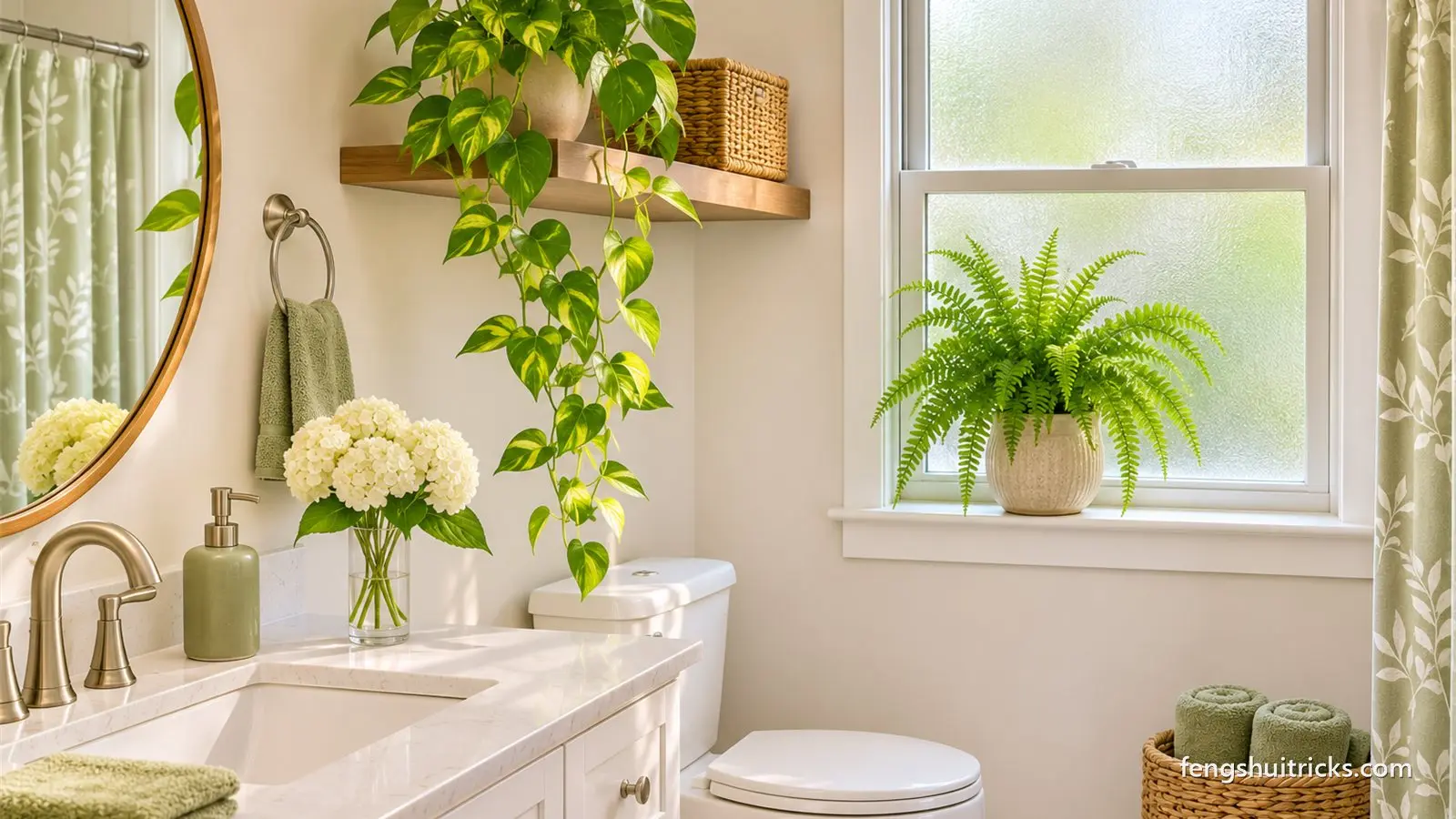
This post contains affiliate links. As an Amazon Associate I earn from qualifying purchases.



If you want to start today, a ready-to-go golden pothos is the one most bathrooms can keep alive.
Why plants fix a bathroom’s Feng Shui
Every drain in the room, the toilet, the sink, the tub, pulls water out of the house. Classical practitioners read that as chi (life energy) leaving with it, which is why bathrooms get blamed for leaks in luck and money.
Plants answer that drain directly. In the five elements, water feeds wood: the water element is absorbed by the wood element, so a living plant turns the downward pull into growth instead of loss.
The practical side lines up too. Pothos and ferns come from damp, shaded forest floors, so a humid bathroom suits them better than almost any other room in the house.
That’s the whole trick: pick a plant that matches your light, keep it healthy, and keep it out of a curious pet’s reach. The chart below sorts all of that at a glance.
The best Feng Shui bathroom plants at a glance
| Plant | Light | Water | Pet-safe | Feng Shui job |
|---|---|---|---|---|
| Golden pothos | Low to bright indirect | Let soil dry first | No | Softens hard edges |
| Boston fern | Bright indirect | Keep evenly moist | Yes | Gentle wood energy |
| Peace lily | Low to medium | Moist, not soggy | No | Calm, flowers in low light |
| Snake plant | Very low to bright | Sparingly | No | Upright, protective |
| Lucky bamboo | Low, no direct sun | Water or moist soil | No | Classic luck symbol |
| Areca palm | Bright indirect | Evenly moist | Yes | Lifts an empty corner |
| Money tree | Bright indirect | When top inch dries | Yes | Wealth symbol |
| Jade plant | Sunny window only | Rarely | No | Coin-leaf prosperity |
| Eucalyptus stems | Any | None (cut stems) | No | Fresh scent, spa feel |
The 9 plants, one by one
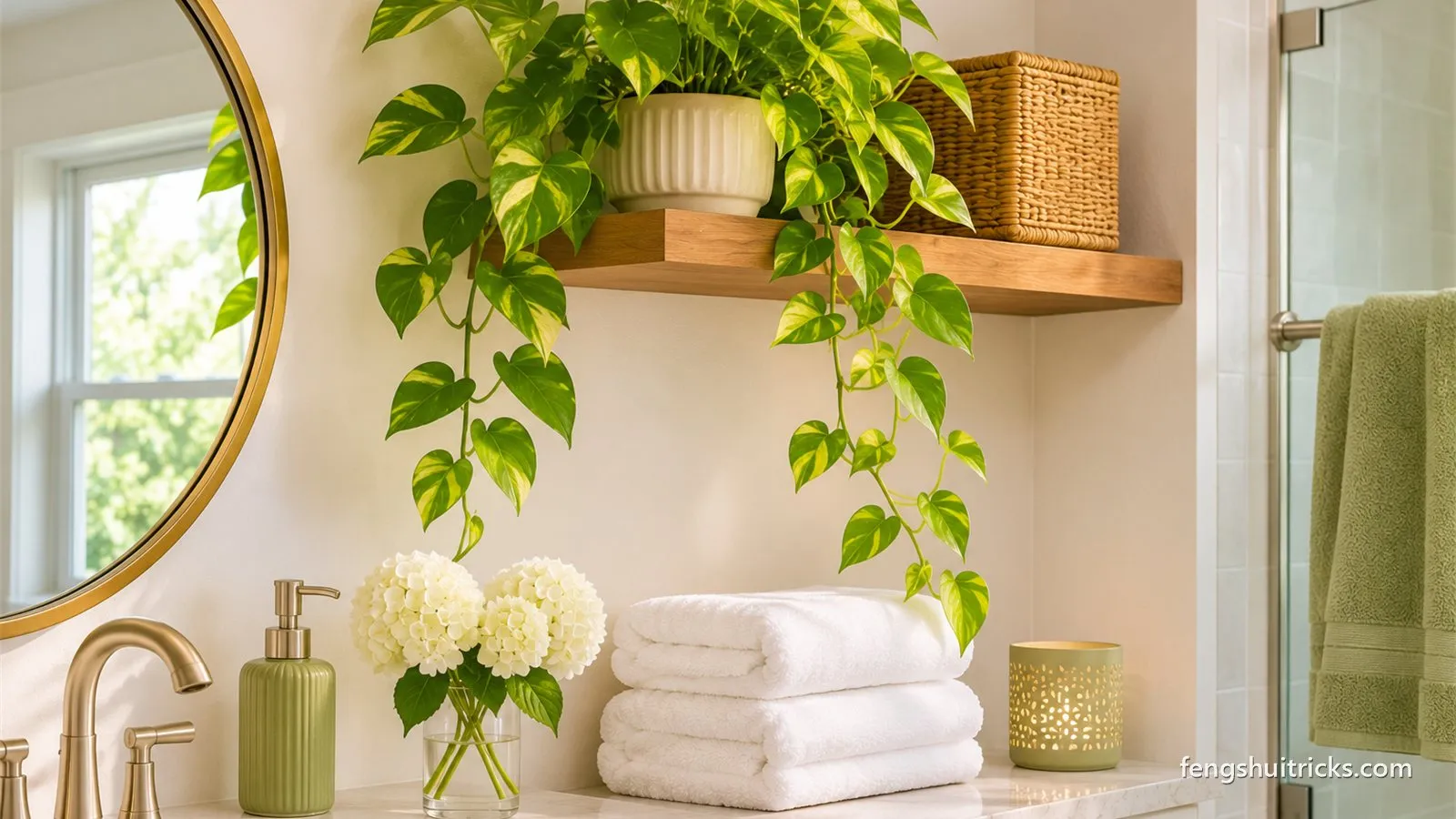
1. Golden pothos, the easiest pick
Golden pothos is the easiest pick for most bathrooms. NC State Extension notes it prefers bright, indirect light and survives for long periods in low light, which describes the average bathroom exactly.
Let the potting mix dry out between waterings; the room’s humidity does part of the job for you. Its trailing vines also soften the hard lines of tile and mirror.
One warning for pet homes: pothos is toxic to cats and dogs if chewed, so hang it or put it on a shelf out of reach.
2. Boston fern, the pet-safe humidity lover
If a cat drinks from your tub, start here. The Boston fern is listed as non-toxic to dogs and cats by the ASPCA, and it loves steam.
Give it bright, indirect light near a frosted window and keep the soil evenly moist. Its feathery fronds soften sha chi, the cutting energy of sharp corners and hard tile.
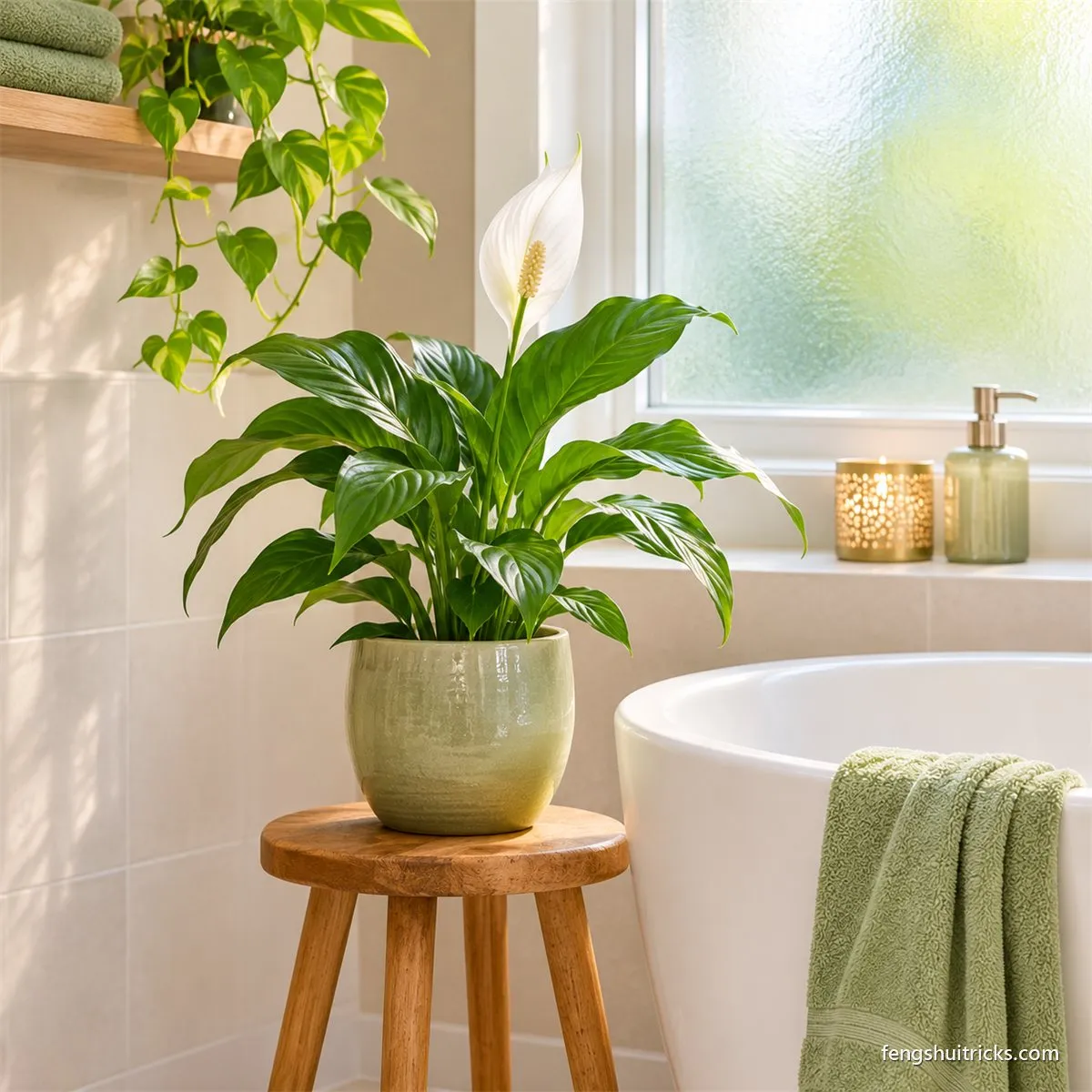
3. Peace lily, the one that flowers in the dark
Clemson Extension calls the peace lily one of the few foliage plants that will flower in low light. For a dim bathroom you still want something alive and blooming in, this is it.
Keep the soil moist but never soggy, and never let the pot stand in water. Its white blooms give the room a calm, spa-like stillness.
It is toxic to pets if chewed, so shelf it high. For placement in other rooms, see the full peace lily Feng Shui meaning guide.
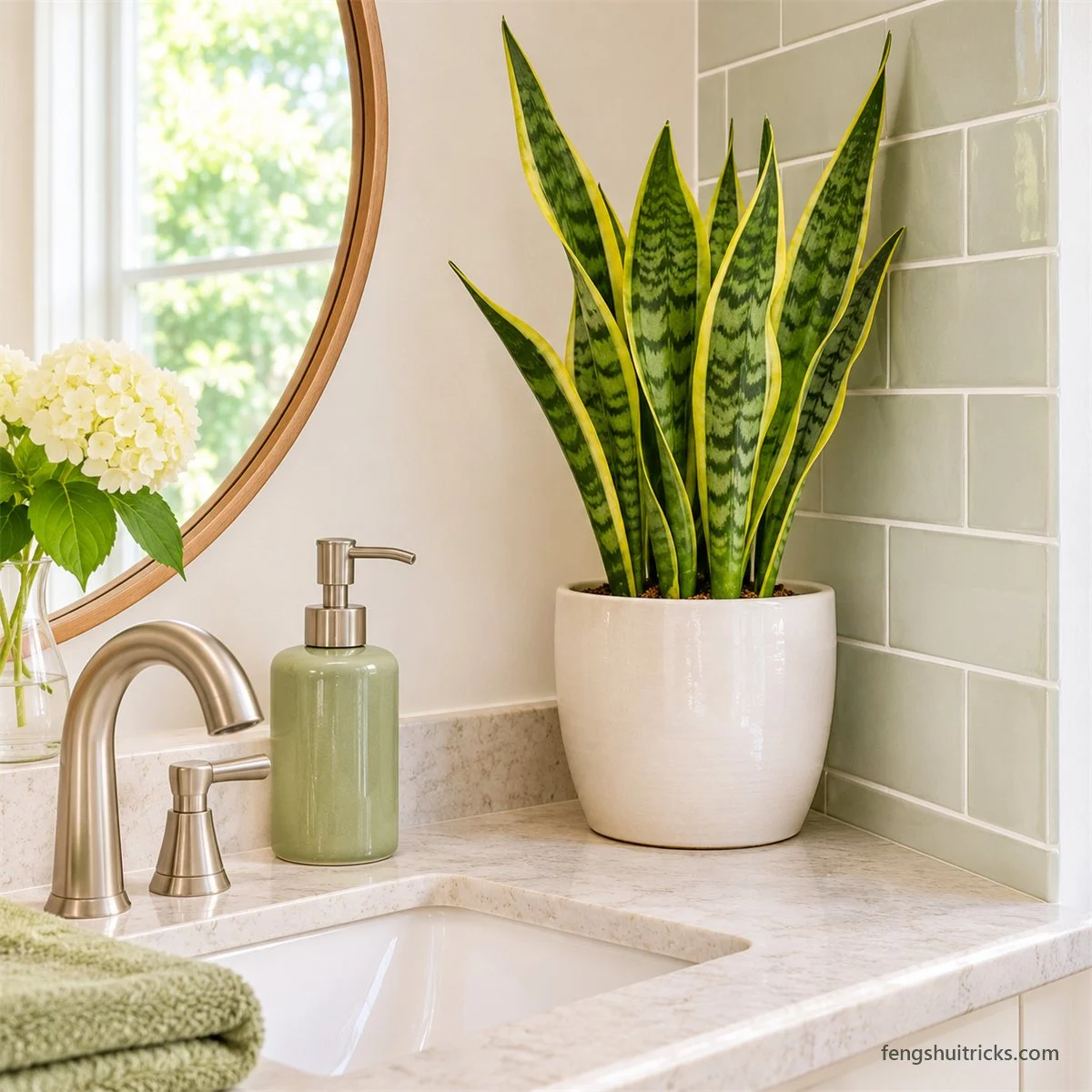
4. Snake plant, for the darkest bathrooms
A snake plant shrugs off conditions that kill everything else. NC State Extension says it tolerates very low light and low humidity, and in winter it needs water only every month or two.
In Feng Shui its upright leaves read as strong, protective wood energy. Some practitioners warn the pointed tips act as poison arrows, so angle the leaves toward the wall, not at the door or the sink.
It is toxic to cats and dogs if eaten. More placements are in our snake plant benefits guide.
5. Lucky bamboo, the classic luck plant
Lucky bamboo is the classic luck gift in Chinese folk tradition, and the number of stalks sets the wish: three for happiness, five for wealth, never four.
It grows in plain water or moist soil and dislikes direct sun, so a shelf away from the window is exactly right. If yours is fading, here’s why lucky bamboo turns yellow and how to stop it.
Despite the name it’s a Dracaena, not a bamboo, and Dracaena species are toxic to cats and dogs. Treat it like the pothos: up high.
6. Areca palm, the pet-safe statement plant
In a bigger family bathroom, an areca palm fills an empty corner with soft upward movement, and the ASPCA lists it as non-toxic to cats and dogs.
It wants bright, indirect light and evenly moist soil, so skip it for a windowless room. Brown tips usually mean the air or soil ran too dry.
7. Money tree, with one honest caveat
The braided money tree is the best-known wealth plant, and it’s pet-friendly: the ASPCA lists Pachira aquatica as non-toxic to cats and dogs.
Schools differ here. Some practitioners keep wealth symbols out of the bathroom entirely, so the money, in their reading, doesn’t go down the drain.
If that logic speaks to you, grow it just outside the bathroom door and let a pothos hold the room.
Give it bright, indirect light and water when the top of the soil dries. Our money tree care guide covers the rest.
8. Jade plant, only with a sunny window
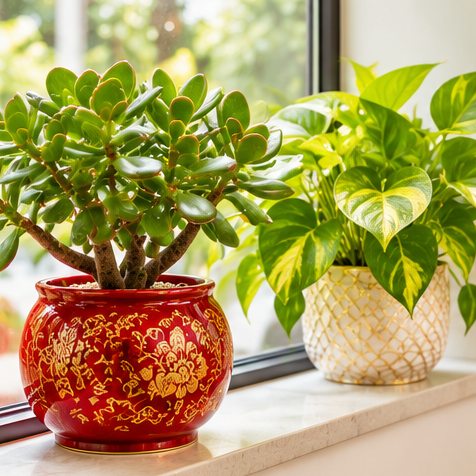
Jade’s coin-round leaves made it the classic prosperity gift. But it’s a desert succulent: it needs a genuinely bright window, dry soil between waterings, and it’s toxic to pets.
In a dim bathroom it will sulk and drop leaves. Give it a sunny sill or keep it in another room.
9. Eucalyptus, the cut-stem shortcut
Potted eucalyptus rarely survives indoors, so don’t buy one for the bathroom. Hang a bunch of cut stems from the shower head instead.
The steam releases the scent, you get the spa effect with zero plant care, and you swap the bunch every few weeks. Keep stems away from pets; eucalyptus oil is toxic to cats and dogs.
Where to put plants in a bathroom
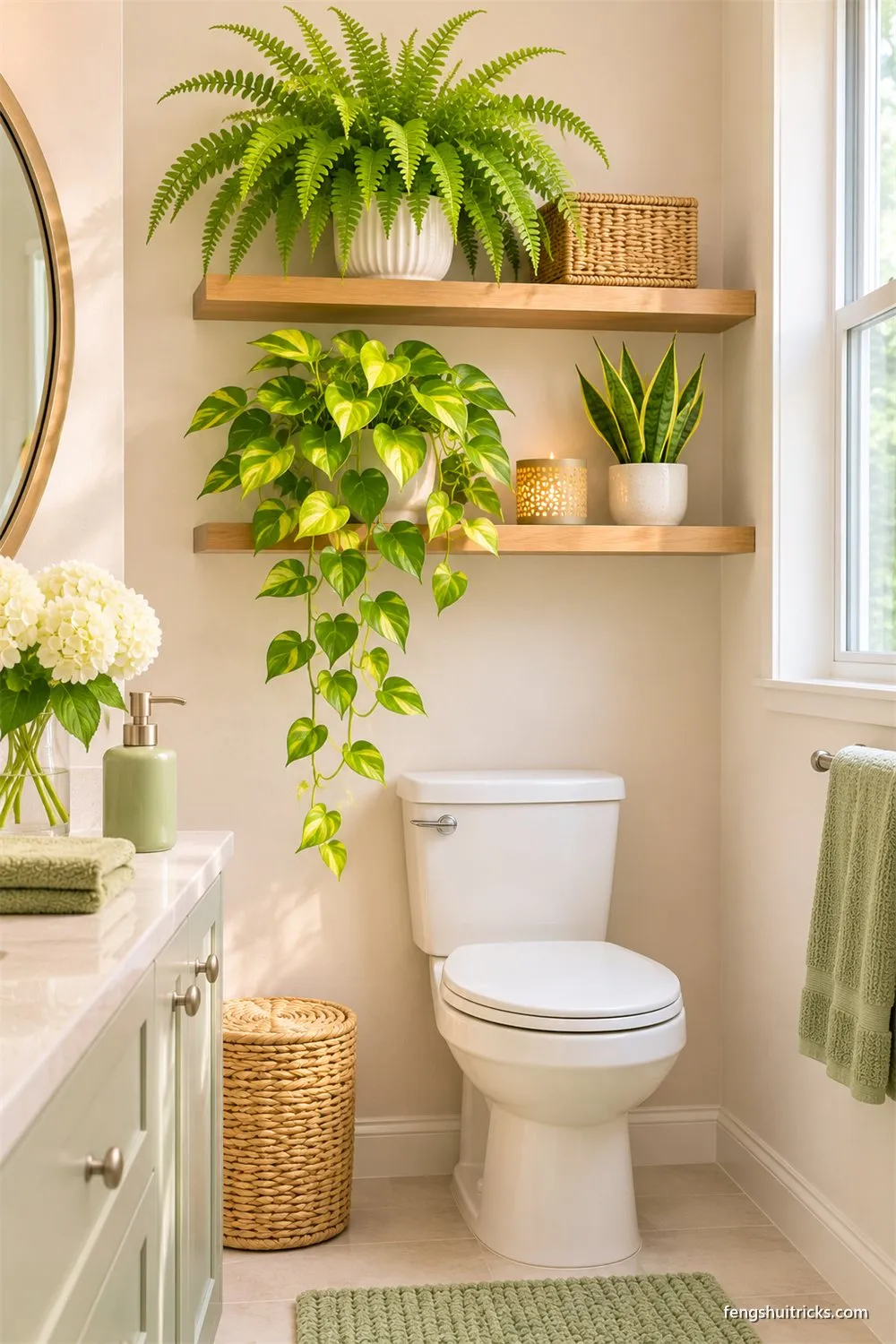
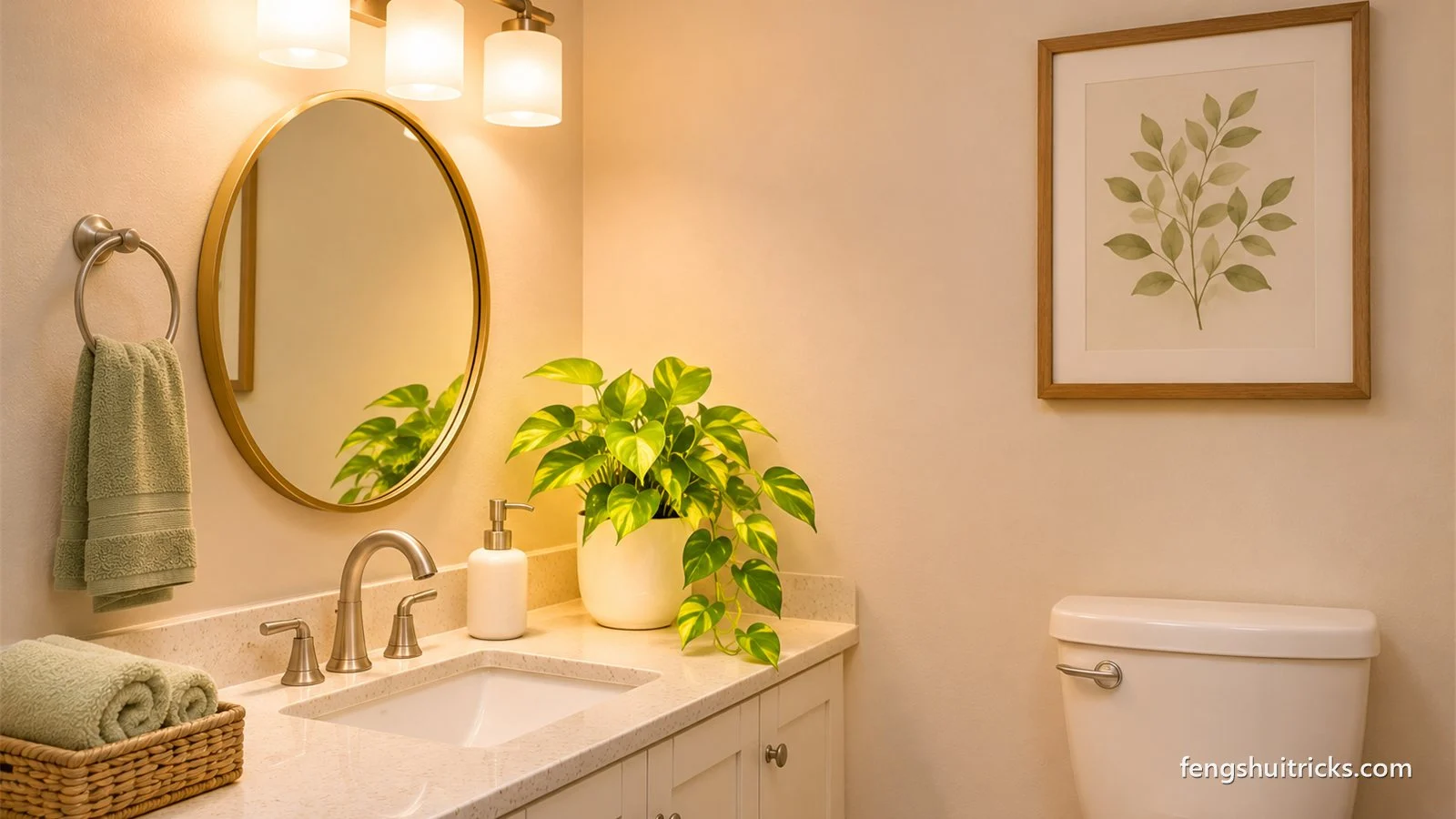
Start at the biggest drain. A small plant on the toilet tank, or on a shelf above it, sits right where the downward pull is strongest. Keep the lid closed too.
After that, match plant to spot: a windowsill for the light lovers, a high shelf for trailing pothos, a floor corner for the palm.
One to three healthy plants is the right number for most bathrooms. A powder room needs just one. Crowding a damp room invites mildew, and that reads as decline in any tradition.
If your bathroom sits in the money corner of your floor plan, plants are the first cure practitioners reach for; our guide to a bathroom in the wealth area walks through the rest.
No window? You still have options
No plant lives in total darkness, but three get close: snake plant, pothos and peace lily all tolerate low light for long stretches.
Rotate it weekly. Keep a twin of the same plant in a bright room and swap the two every week. Each one gets recovery time, and the bathroom never sits empty.
Or change the light itself: one full-spectrum LED grow bulb in the vanity fixture, run a few hours a day, is enough for a small pot.
Skip ferns and palms here; they want real light. If nothing survives, a clean, realistic faux plant is the honest fallback (more on that in the FAQ).
Plants to avoid in a bathroom
- Cactus and anything spiky. In Feng Shui, spikes aimed at you are sha chi, often called poison arrows, and a bathroom is too small to stay out of their line. A desert plant also hates the humidity.
- Anything dying. Never leave a dying plant in the bathroom. In Feng Shui it radiates decline; practically, it’s mold waiting to happen. Replace it the week it starts to fail.
- Dusty fake plants. A faded faux plant collects grime and stale energy. If you use one, keep it clean and lifelike.
- A jungle. Humidity plus crowding equals mildew. Stop at three pots.
- Orchids and fruiting plants, by some schools. Older guides call blooms and fruit in a bathroom wasted abundance. Treat that one as optional, not law.
Bathroom-friendly plant picks
As an Amazon Associate we earn from qualifying purchases. Prices and availability come from Amazon.
Frequently asked questions
Are plants in the bathroom good Feng Shui?
Yes. In the five-element cycle, water feeds wood, so a living plant takes up the water energy a bathroom keeps draining away and turns it into growth. One or two healthy plants are one of the simplest bathroom cures in Feng Shui.
How many plants should a bathroom have?
One to three healthy plants is plenty for most bathrooms. A powder room needs just one small pot. The goal is a living counterweight to the drains, not a jungle; a crowded, damp room tips back into stale, heavy energy.
Can I put a plant on the toilet tank?
Yes, and many practitioners recommend exactly that. The toilet is the biggest drain in the room, so a small humidity-loving plant above it, such as a pothos or a little fern, sits right where the downward pull is strongest. Keep the lid down too.
Are fake plants bad Feng Shui in a bathroom?
Practitioners disagree. Many Western teachers accept a clean, realistic faux plant in a dark bathroom, while classical schools want living wood energy only. Everyone agrees on two points: a dusty, faded fake collects stale energy, and a dying real plant is worse than no plant.
Which bathroom plants are safe for cats and dogs?
Boston fern and areca palm are listed as non-toxic to cats and dogs by the ASPCA. Golden pothos, peace lily and snake plant are all toxic if chewed, so hang them high or pick the fern instead if your pets drink from the tub.
Conclusion
A bathroom doesn’t need a remodel to stop feeling like a drain on the house. Because water feeds wood, one living plant matched to your light does the balancing.
Pothos or peace lily suit most rooms, a snake plant takes the darkest, and a Boston fern or areca palm is the pick where pets roam.
Check the chart before you buy, keep the toxic ones up high, and swap out anything that starts to fail.
If you only do one thing: put a golden pothos on a high shelf near the toilet, and keep the lid down.
Recommended reading
- The best Feng Shui plants for your bedroom
- How to prune and care for lucky bamboo
- Simple remedies for negative energy at home
- What decluttering does for your home’s energy

Bhawana Rathore is the founder of Feng Shui Tricks and a Feng Shui writer and educator. Feng Shui helped her through a hard time, and since 2020 she has been turning it into clear, practical steps, with more than 400 guides and a set of free calculators for arranging your home, understanding lucky symbols and following the Chinese zodiac. She completed the Professional Diploma Course in Feng Shui (CTAA-accredited course) in 2026 and teaches the same ideas on the Feng Shui Tricks YouTube channel. More about Bhawana. If the guides help you, you can buy her a coffee here.