

Yin vs Yang represents two opposite but complementary energies in ancient Chinese philosophy. Yin is associated with darkness, coolness, rest, and stillness, while Yang represents light, warmth, activity, and movement.
But here’s the most important thing to understand: Yin is not bad, and Yang is not good. Both are necessary for balance.
If you’re wondering which is Yin and which is Yang, what their differences are, or whether you’re a Yin or Yang person, this guide explains everything with simple examples, comparison tables, and practical Feng Shui tips.

Quick Answer: What Is the Difference Between Yin and Yang?
The simplest difference is that Yin represents calm, cool, inward energy, while Yang represents active, warm, outward energy.
| Yin | Yang |
|---|---|
| Black side | White side |
| Moon | Sun |
| Night | Day |
| Darkness | Light |
| Coolness | Warmth |
| Rest | Activity |
| Stillness | Movement |
| Inward energy | Outward energy |
| Receptivity | Expression |
| Winter | Summer |
| Traditionally feminine | Traditionally masculine |
Remember: Yin and Yang are not enemies. They complement each other, and neither is permanently stronger or better.
For example, a peaceful bedroom may benefit from more Yin qualities, while an active living room may benefit from more Yang qualities.
If you’re decorating your home, understanding the five Feng Shui elements can also help you choose colors and materials that suit each room.
Which Is Yin and Which Is Yang in the Symbol?
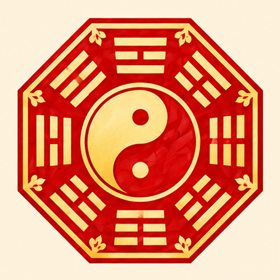
The traditional Yin Yang symbol, also called the Taijitu, is divided into two curved sections.
- Yin is the black section with a white dot.
- Yang is the white section with a black dot.
The small dots represent the idea that each force contains the potential for its opposite.
The curved dividing line suggests continuous movement and transformation rather than a fixed separation.
The outer circle represents the unity of the two forces.
One important detail: the black and white sections are not permanently assigned to the left or right side. The symbol can be rotated, so identify Yin and Yang by their colors, not their positions.
What Does Yin Mean?
Yin energy is associated with stillness, receptivity, coolness, darkness, and rest.
In traditional Chinese philosophy, Yin is connected with the moon, nighttime, shade, winter, and inward movement.
Common examples of Yin qualities include:
- Quiet bedrooms
- Cool temperatures
- Soft lighting
- Rest and relaxation
- Calm, reflective activities
- Shaded outdoor spaces
- Slow and gentle movement
Yin is traditionally associated with feminine symbolism. However, this doesn’t mean only women have Yin qualities.
Everyone experiences both Yin and Yang.
For home decorating, Yin qualities are especially useful when designing restful spaces. Our guide to Feng Shui bedroom colors explains how different shades can create a calmer atmosphere.
What Does Yang Mean?
Yang energy represents activity, warmth, brightness, movement, and outward expression.
It is traditionally associated with the sun, daytime, summer, heat, and growth.
Examples of Yang qualities include:
- Bright sunlight
- Physical activity
- Warm temperatures
- Busy social environments
- Exercise and movement
- Active working hours
- Energetic conversations
Yang is traditionally associated with masculine symbolism, but it is not limited to men.
In Feng Shui, brighter colors and stronger lighting are often used to create a more active atmosphere. You can explore practical examples in our guide to Feng Shui colors for the home.
Yin and Yang Difference: Real-Life Examples
The easiest way to understand Yin and Yang energy is through everyday experiences.
| Situation | Yin Example | Yang Example |
|---|---|---|
| Time | Night | Day |
| Weather | Cold | Hot |
| Activity | Sleeping | Exercising |
| Lighting | Dim lighting | Bright lighting |
| Seasons | Winter | Summer |
| Movement | Resting | Running |
| Personality | Reflective | Expressive |
| Home | Peaceful bedroom | Active living room |
| Work | Quiet planning | Presentations and meetings |
These are relative associations rather than absolute categories.
For example, a cool summer evening can be Yin compared with a hot afternoon, even though summer is generally associated with Yang.
How Do Yin and Yang Energies Work Together?
In Taoist philosophy, Yin and Yang describe the changing relationship between complementary forces.
Their relationship is based on four important ideas.
1. Yin and Yang Are Opposites
Light and darkness, warmth and coolness, and activity and rest are contrasting qualities.
2. Yin and Yang Depend on Each Other
We understand daytime partly because we experience nighttime.
Similarly, activity and rest support different parts of everyday life.
3. Yin and Yang Continuously Change
Day turns into night, and winter eventually gives way to spring and summer.
This continuous transformation is central to Yin Yang philosophy.
4. Yin and Yang Contain Elements of Each Other
The two dots inside the Yin Yang symbol illustrate this idea.
Even within a predominantly Yin situation, Yang qualities can emerge, and vice versa.
In Feng Shui, this idea is closely related to how we arrange spaces and understand the traditional flow of Chi energy


Am I Yin or Yang? How to Understand Your Energy
Many people search for “Am I Yin or Yang?” because they want to understand their personality.
In traditional Yin Yang philosophy, no person is entirely Yin or entirely Yang.
However, you may notice certain qualities are more prominent in your everyday behavior.
Signs You May Express More Yin Qualities
- You enjoy quiet environments.
- You prefer thoughtful conversations.
- You like spending time reflecting.
- You appreciate calm routines.
- You often listen before speaking.
Signs You May Express More Yang Qualities
- You enjoy active environments.
- You like social interaction.
- You prefer taking quick action.
- You enjoy energetic activities.
- You often express your ideas openly.
You may relate to both lists, depending on the situation.
Expert tip: Yin and Yang are philosophical categories, not scientifically validated personality types. Avoid treating them as permanent labels.
If you enjoy exploring Chinese metaphysical personality traditions, try our Five Elements Calculator.
Feng Shui Yin Yang Story
Ying Yang symbol is associated with Chinese philosophy, where yin and yang depict two opposite energies. Yin means darkness being represented by the black-painted side, and yang is light.
The light, which is luminous energy and presents itself in a very intense way, is the yang, and the very weak light is the yin. According to the Chinese, the world is composed of opposing forces, and finding a balance between them is essential.


Some authors describe it as the moon and the sun, the man and the woman, but they are mistaken definitions. Chinese philosophy is basically composed of yin and yang energy, negative and positive.
The two spheres within the symbol symbolize the idea that, whenever each force reaches its extreme point, an opposite feeling is manifested within itself.
In the world of yin-yang tattoos, the YinYang symbol is one of the most popular, as it represents balance.
Energy Meaning Of Yin– Which is yin
Yin is the passive, feminine, nocturnal, dark, and cold principle. It is on the left side of the sphere, in black.
Energy Meaning Of Yang– Which is yang
Yang is the active principle, masculine, daytime, luminous, and warm. It is represented by the right side of the sphere, in white.
Yin vs Yang Personality: Can Opposites Attract?
In relationships, Yin and Yang are often used as symbols of complementary qualities.
One partner might be naturally quiet and reflective, while the other is more expressive and energetic.
These differences can sometimes complement each other.
However, successful relationships depend on communication, trust, shared values, and mutual respect—not simply on whether one partner is Yin and the other is Yang.
Yin and Yang in Feng Shui: How to Balance Your Home
In Feng Shui, Yin and Yang describe the balance between calm and active qualities within a space.
A home needs both.
Too much activity can make a room feel overwhelming, while a space with very little light or stimulation may feel dull.
The goal is not to create equal amounts of Yin and Yang everywhere. Instead, choose the qualities that suit each room’s purpose.
Yin Energy in the Bedroom
Bedrooms generally benefit from calming Yin qualities.
Try these simple ideas:
- Use soft, warm lighting.
- Choose comfortable bedding.
- Reduce unnecessary noise.
- Keep clutter under control.
- Select soothing colors.
- Avoid overly stimulating decorations.
Your bed position also matters in traditional Feng Shui. Follow our Feng Shui bedroom layout guide for practical arrangement ideas.
For smaller rooms, see how to Feng Shui a small bedroom without overcrowding the space.
Yang Energy in the Living Room
Living rooms often benefit from a little more Yang energy because they’re used for conversation, gatherings, and family activities.
Consider natural lighting, comfortable seating, fresh air, cheerful artwork, healthy plants, and clear walking spaces.
Yin and Yang in a Home Office
A productive office needs both qualities.
Yang is useful for alertness, movement, and activity. Yin is helpful for concentration, reflection, and quiet thinking.
Balance task lighting and comfortable furniture with an organized, distraction-free workspace.
If you want to explore the traditional connection between work and directional energy, read our guide to Feng Shui for career.
You can also use the Feng Shui Compass Tool to explore your home’s directions.
Yin vs Yang Zodiac Compatibility Signs
In the Chinese zodiac, there are 12 different animals that comprise Five Feng Shui elements like Wood, Water, Earth, Fire, and Metal based on the birth elements.
Each sign also has Yin and yang in it which makes all different identities. Like if you were born in the year of a tiger, then you would have Tiger Yang polarities. As each sign has either yin or yang polarities.
Let us find below a quick yin and yang zodiac chart based on your birth element.
For example, the Tiger is traditionally a Yang zodiac animal, while the Rabbit is a Yin zodiac animal.
However, a complete Chinese astrology interpretation may also consider the Five Elements and birth details.
Your zodiac animal’s polarity doesn’t mean you possess only one type of energy.
You can also explore your personal Feng Shui directions using our Kua Number Calculator.
The Basic Philosophy Of Yin Yang
According to Yin Yang and his philosophy on the universe, everything that exists is constant and at the same time cyclical. When a force dominates, it is then replaced by its opposite force. This activity continues and is constantly repeated over time.


Some yin yang examples that illustrate the YinYang philosophy are:
- Life and death
- Night and day
- Sky and earth
- Health and disease
- Darkness and light
- Poverty and wealth
- Seasons cycle: cold to hot
- The YinYang symbol
Yin Yang Black and White Sections Together
Together, the Yin Yang black and white areas represent the interplay of energies found in all things. Both illustrate the cyclical nature of Yin and Yang and all that it represents.
Yin Yang Meaning In a love relationship
Definition of a love relationship- The Yin Yang symbol affirms that opposites are attracted to each other. When that person you were waiting for appears in your life, you consider them your better half, your lover, your soulmate, your partner, your love.
Yin and Yang in Chinese Astrology
Yin and Yang astrology is based on the traditional idea that natural cycles contain alternating complementary qualities.
In Chinese metaphysical systems, the Five Elements—Wood, Fire, Earth, Metal, and Water—also have Yin and Yang expressions.
For example, Yin Wood and Yang Wood are both associated with Wood, but they have different symbolic interpretations.
This creates a more detailed system than simply labeling a person Yin or Yang.


The Yin Yang Symbols Meaning
The Yin Yang symbol represents balance, transformation, and the relationship between complementary forces.
The Outer Circle
The outer circle symbolizes the complete whole. It shows that Yin and Yang belong to one interconnected system.
The Black Section
The black section represents Yin, traditionally associated with darkness, coolness, rest, and inward movement.
The White Section
The white section represents Yang, associated with light, warmth, activity, and outward movement.
The Two Small Dots
The white dot within Yin and the black dot within Yang illustrate that each contains the potential for the other.
The Curved Line
The flowing boundary represents continuous transformation.
The symbol isn’t divided by a rigid straight line because Yin and Yang are understood as dynamic rather than permanently separated.


The Black Section
The black area is associated with Yin along with the following characteristics:
| Female | Submission |
| passive | Ease |
| Intuitive | Night |
| Moon | Soft |
| Dark | Stillness |
| Cheated | River |
| Cold | The white section |
The white area represents Yang, and has the following characteristics:
| Male | Strong |
| Active | Hot |
| Logical | Expansion |
| Sparkly | Hard |
| Sun | Movement |
| Light | Mountains |
| Creation | Upward movement |
What Are Some Examples Of Yin and Yang
There are many ways we can understand yin yang. Light, day, and sun represent the yang side. Some of the other examples that are considered yang include heat, summer, movement, awake, and masculinity. Whereas the opposites of these are considered yin energies like (cold, winter, rest, sleep, and femininity).
Which Side Is Bad Yin or Yang
Yin, is associated with the dark side, with everything hard, negative, cold, wet, and feminine. On the other hand, the Yang, or the light side, is associated with things soft, positive, warm, dry, and masculine.
Feng Shui-Yin Yang | Male Female Concept
Good prevailing, as long as yin and yang are in balance. A room or home will “sit” out of balance when the Yin Yang, or water and fire energies of Feng Shui, are out of balance.


The Yin Yang symbol lends itself well to the circular and yantra mandala. However, it does not really work as a religious mandala or yantra in the traditional sense.
In religions like Hinduism and Buddhism, the yantra and mandala are designed to encompass gods, kings, or Buddhas within four doors. The deities, kings, or Buddhas included in the design are chosen based on one’s meditation goals.
In the sense that a mandala or yantra is meant to be used as a tool for meditation, the Yin and Yang symbol works quite well. It is more in accordance with the Hindu yantra, however, because yantra is usually only a few colors. Mandalas are generally much more colorful.
The colors used in the Yin and Yang design can be chosen to help cleanse and balance your chakras during meditation. For example, blue and pink, turquoise.
Or green Yin Yang mandala can help you focus on balancing the heart and throat chakras. A Yin Yang design with two fish could be useful if your purpose for Meditation is abundance or fertility.


Is Yin Good or Bad? Is Yang Positive or Negative?
Neither Yin nor Yang is inherently good or bad.
Because Yin is traditionally associated with darkness, some people incorrectly assume it represents evil or negative energy.
Similarly, Yang is sometimes described as positive simply because it is associated with light.
But in Chinese philosophy, Yin and Yang are complementary qualities, not moral judgments.
A quiet night isn’t bad because it’s Yin, and a hot afternoon isn’t automatically good because it’s Yang.
Both have their place.
Yin and Yang Male and Female Meaning
Traditional Chinese philosophy often associates Yin with feminine symbolism and Yang with masculine symbolism.
However, these are symbolic classifications rather than scientific descriptions of men and women.
Every person experiences both receptive and active qualities.
Someone can be calm in one situation and energetic in another.
Understanding Yin and Yang as flexible qualities is more useful than assigning rigid personality roles based on gender.
Yin vs Yang Yoga: Meaning and Benefits
Yin Yang Yoga combines slower, more passive practices with active movement.
Yin Yoga typically emphasizes long-held, supported stretches and a slower pace.
Yang-style yoga practices generally involve more movement, muscular engagement, and dynamic sequences.
A Yin Yang Yoga session might begin with flowing movements and end with slower stretching and relaxation.
Possible benefits of appropriately practiced yoga include improved flexibility, body awareness, and relaxation.
Yoga should not be treated as a guaranteed treatment for medical conditions.
Yin and Yang in Traditional Chinese Medicine
Yin and Yang are also important concepts in Traditional Chinese Medicine (TCM).
Within that traditional framework, practitioners use Yin and Yang to describe patterns of warmth, coolness, activity, rest, and other bodily functions.
For example, Yin is traditionally associated with cooling and nourishing qualities, while Yang is associated with warming and activating qualities.
However, these are concepts within a traditional medical system, not direct equivalents of modern physiological measurements.
There is no established scientific test that determines whether someone’s entire body is Yin or Yang.
Persistent symptoms should be evaluated by a qualified healthcare professional rather than attributed solely to an energy imbalance.
What Does the Yin Yang Emoji Mean?
The Yin Yang emoji represents balance, harmony, duality, and complementary forces.
People commonly use it in messages, artwork, tattoos, and social media posts to express balance in life, harmony between opposites, peace, unity, and personal growth.
The symbol doesn’t simply mean good versus evil.
How to Type the Yin Yang Symbol on Your Keyboard
You can copy the symbol directly:
In Microsoft Word, use Insert → Symbol to find the Yin Yang character.
On Windows, pressing Windows + . opens the emoji picker, where you can search for Yin Yang.
On mobile devices, the symbol may be available through the emoji keyboard.
What Do Yin Yang Tattoos Represent?
A Yin Yang tattoo commonly symbolizes balance, harmony, transformation, and the connection between opposing forces.
Some people choose the design to represent personal growth or the importance of balancing work and rest.
Others combine the symbol with animals, flowers, or natural elements.
The meaning ultimately depends on the individual wearing the tattoo.
What Is the Meaning of Yin Yang Fish?
Fish are sometimes incorporated into Yin Yang artwork because their curved shapes can resemble the two halves of the Taijitu symbol.
Two fish swimming in a circular pattern may symbolize harmony, continuous movement, and interconnectedness.
Koi Fish Yin Yang Meaning
In decorative art, two koi fish arranged in a circle are often used to represent balance and perseverance.
Their contrasting colors and flowing movement make them popular in Feng Shui-inspired artwork.
This symbolic use is different from the separate culinary term sometimes called “Yin Yang fish.”
What Does a Yin Yang Dragon Represent?
Dragons are traditionally associated with power, vitality, and Yang qualities in Chinese symbolism.
When a dragon appears alongside a Yin Yang symbol, the artwork may represent the balance between strength and restraint, movement and stillness, or complementary natural forces.
The meaning can vary depending on the design and cultural context.
Yin Yang Tree of Life Meaning
A Yin Yang Tree of Life combines two symbolic ideas: the interdependence of opposites and the connection between living things.
Such artwork often uses contrasting black-and-white branches or roots to illustrate balance.
Your original article includes this Amazon product shortcode, which should remain in its original WordPress block:
Yin Yang Quotes and Their Meaning
Yin Yang philosophy is often summarized through ideas about balance, change, and interdependence.
Here are three original reflections inspired by those themes:
- “Rest gives movement meaning, and movement gives rest its purpose.”
- “Balance is not standing still; it is learning when to move.”
- “Light and shadow belong to the same changing world.”
These are modern reflections, not historical quotations from Lao Tzu or other Chinese philosophers.
How to Balance Yin and Yang in Everyday Life
You don’t need special objects or complicated rituals to explore the idea of Yin Yang balance.
Start with ordinary daily habits.
- Balance activity with rest. Make room for both productive work and relaxation.
- Adjust your environment. Use brighter lighting for active tasks and softer lighting when winding down.
- Spend time outdoors. Experience natural changes in light, temperature, and seasons.
- Create comfortable spaces. Keep your home organized and suitable for the activities you enjoy.
- Be flexible. Recognize that your needs change throughout the day.
In Feng Shui, balance is less about making every room identical and more about creating a comfortable environment for its intended purpose.
Frequently Asked Questions About Yin vs Yang
Which one is Yin and which one is Yang?
Yin is the black section of the traditional symbol, and Yang is the white section. Yin is associated with rest and coolness, while Yang represents activity and warmth.
What is the main difference between Yin and Yang?
Yin represents receptive, cool, quiet, and inward qualities. Yang represents active, warm, bright, and outward qualities.
Is Yin negative and Yang positive?
Not in the sense of good and evil. Yin and Yang describe complementary qualities, and neither is inherently bad.
Am I Yin or Yang?
Everyone has both Yin and Yang qualities. You may express more of one in particular situations, but neither is a permanent scientific personality classification.
Can someone be both Yin and Yang?
Yes. In traditional Chinese philosophy, Yin and Yang are interconnected and continuously changing.
Which is stronger, Yin or Yang?
Neither is universally stronger. Their relative influence depends on the situation and context.
Which one is better, Yin or Yang?
Neither is better. Both are considered necessary within Yin Yang philosophy.
Is Yin male or female?
Yin is traditionally associated with feminine symbolism, while Yang is associated with masculine symbolism. These associations don’t mean women are exclusively Yin or men exclusively Yang.
What does Yin or Yang mean in relationships?
Yin and Yang may symbolize complementary personality qualities or the balance between different needs within a relationship.
What is Yin Yang energy in Feng Shui?
Yin energy refers to quieter, calmer qualities, while Yang energy represents brighter and more active qualities within a space.
What is an example of Yin and Yang?
Night and day are classic examples. Night is generally associated with Yin, while daytime is associated with Yang.
Is the moon Yin or Yang?
The moon is traditionally associated with Yin, while the sun is associated with Yang.
What does the Yin Yang symbol mean spiritually?
The moon is traditionally associated with Yin, while the sun is associated with Yang. It represents the interconnectedness of complementary forces, continuous transformation, and balance.
What is the correct spelling: Yin Yang or Ying Yang?
The standard spelling in English is Yin Yang. “Ying Yang” is a common misspelling.
Related Feng Shui Guides
If you want to apply Yin and Yang principles to your home, explore these additional resources:
- Feng Shui Bedroom Tips – Create a more relaxing bedroom.
- Complete Feng Shui Bedroom Guide – Explore furniture arrangement, lighting, and décor.
- Feng Shui Bathroom Guide – Improve comfort and organization.
- Front Door Energy Checker – Explore traditional entrance-related Feng Shui ideas.
- Five Elements Calculator – Learn about traditional element associations.
The original article also includes five related-post links under titles such as “How To Feng Shui Every Room In Your House” and “What Is Feng Shui Bagua and Its Usages in Home.” Keep those original linked blocks as well; these new links are additions, not replacements.
Conclusion
The difference between Yin and Yang is simple: Yin represents calm, cool, dark, and inward qualities, while Yang represents active, warm, bright, and outward qualities.
Neither is good or bad, and neither can be understood completely without the other.
In Feng Shui, this philosophy can help you think about how to balance quiet and active spaces in your home.
Whether you’re exploring Yin Yang personality traits, Chinese astrology, yoga, or the traditional symbol, the central idea remains the same: balance comes from understanding how contrasting qualities work together.

Bhawana Rathore is the founder of Feng Shui Tricks and a Feng Shui writer and educator. Feng Shui helped her through a hard time, and since 2020 she has been turning it into clear, practical steps, with more than 400 guides and a set of free calculators for arranging your home, understanding lucky symbols and following the Chinese zodiac. She completed the Professional Diploma Course in Feng Shui (CTAA-accredited course) in 2026 and teaches the same ideas on the Feng Shui Tricks YouTube channel. More about Bhawana. If the guides help you, you can buy her a coffee here.